The S&P 500 has shown a notable recovery in recent weeks, climbing back to record levels after initially dipping 9% below its peak in late March. This resurgence is primarily attributed to optimistic forecasts concerning a potential resolution with Iran. However, this rebound may have come too soon, as multiple economic indicators suggest a more complex landscape ahead.
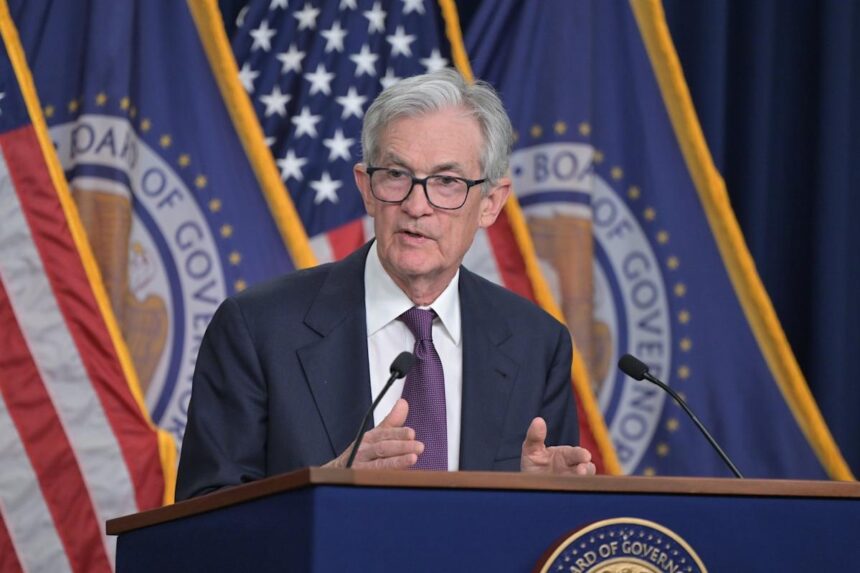
Oil prices remain stubbornly high, exceeding $100 per barrel, and inflation continues to rise, raising concerns among investors. Jerome Powell, the Chairman of the Federal Reserve, articulated these worries at his final press conference, emphasizing the “highly uncertain” economic outlook. He pointed out that the ongoing conflict in the Middle East further complicates predictions about the economy’s trajectory.
Earlier in the year, the trend suggested that inflation was stabilizing and job growth was stagnant, which led investors to anticipate interest rate cuts from the Federal Reserve in the near future. Traders were betting on at least one 25-basis-point cut by April and potentially two by December 2026, according to the CME Group’s FedWatch tool.
However, recent developments have contradicted these expectations. The Federal Open Market Committee (FOMC) has opted to keep its benchmark interest rate steady during its last three meetings, and Powell’s latest comments highlight the possibility of ongoing inflationary pressures. He warned that the conflict with Iran could further drive prices up across the U.S. economy, stating that, in the near term, increased energy costs would elevate overall inflation levels.
Indeed, data indicates that the Consumer Price Index (CPI) inflation surged by 90 basis points to 3.3% in March, driven largely by escalating gasoline prices, marking the highest rate since April 2024. Analysts at the Federal Reserve Bank of Cleveland predict that CPI inflation could reach approximately 3.6% in April, as rising gas prices are expected to contribute to increased transportation and manufacturing costs across the economy.
The anticipated interest rate cuts may not happen as investors had hoped. Economists from JPMorgan Chase suggest that the FOMC might maintain its current rates through 2026, with a shift to rate hikes potentially starting in the third quarter of 2027. This scenario could pose serious challenges for the stock market.
Currently, the S&P 500 trades at a multiple of 20.9 times forward earnings, which is above the five-year average of 19.9 times. Investors have been comfortable with this valuation largely due to the expectation of future interest rate cuts. Should it become apparent that the Federal Reserve’s rate-cutting cycle has ended, the perceived value of these stocks could diminish significantly.
The valuation of stocks is often based on projected future cash flows, where the relevant discount rate is influenced by interest rates. Higher rates necessitate a higher discount rate, consequently lowering the present value of future profits. This dynamic typically compresses stock price-to-earnings multiples, as investors become less inclined to pay premium prices for returns that appear less favorable.
While the situation remains fluid—with potential for improved conditions should geopolitical tensions ease and inflation moderate—the risk of escalation in the Iranian conflict combined with prolonged high oil prices could trigger an economic recession. Historical trends indicate that such downturns are likely to lead to sharp declines in the S&P 500.
Given these factors, potential investors should approach buying S&P 500 index stocks with caution. Analysts from The Motley Fool emphasize considering alternatives, noting that their research has identified ten high-potential stocks that may yield significant returns. Their historical analysis indicates a strong outperformance of their recommended stocks compared to the broader S&P 500, suggesting a strategic shift may be beneficial for discerning investors.