In a significant financial push ahead of the 2026 midterm elections, Fairshake and Leading the Future have collectively deployed over $100 million to support candidates aligned with their agendas. However, a recent Politico poll reveals a notable skepticism among the American electorate regarding both cryptocurrency and artificial intelligence (AI), which could complicate the electoral strategies of these tech-backed groups.
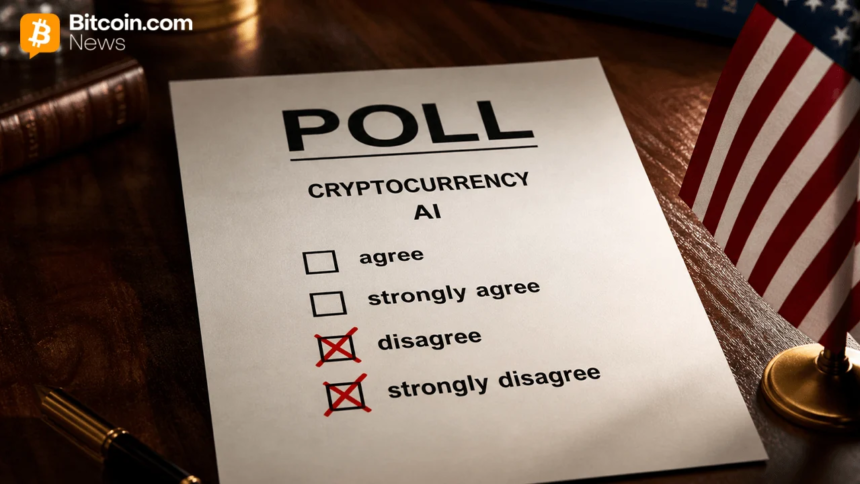
The poll indicates that a substantial 45% of Americans perceive investing in cryptocurrency as more risky than beneficial, with a nearly identical 44% expressing concern that AI is advancing too rapidly. These concerns illustrate a potential disconnect between the heavy financial investments from Silicon Valley in political campaigns and the hesitations of the average voter regarding these technologies.
This skepticism is further evidenced by the fact that nearly half of Americans trust traditional banks more than cryptocurrency platforms, while only 17% favor crypto institutions. In addition, a two-thirds majority supports stricter regulations or foundational principles for the AI sector. This public sentiment presents a challenge for the super PACs representing these industries as they attempt to convert financial contributions into political success.
Politico’s report highlights that several tech-focused super PACs are emerging as formidable players in the political arena, often matching or surpassing the fundraising efforts of established political organizations. As election day approaches, the varied public reception to crypto and AI might influence the outcomes for candidates associated with these industries. Poll respondents appear to favor candidates who advocate for stricter regulations on AI, while those supported by pro-technology groups seeking deregulation face a less favorable reception.
One of the prominent players, Leading the Future, a pro-AI super PAC, has raised more than $75 million since its inception, actively deploying funds in critical primaries across states including North Carolina, Texas, Illinois, and New York. Concurrently, Fairshake, backed primarily by major entities in the crypto space such as Coinbase and Andreessen Horowitz, has already invested $28 million in various competitive races.
Both sectors are also investing significantly in lobbying efforts in Washington, D.C. The AI lobby has seen unprecedented growth, with companies like OpenAI and Anthropic committing substantial resources to influence policy. In the crypto realm, organizations are pushing for the approval of the CLARITY Act, which aims to establish a coherent framework for digital asset regulation. This legislation, currently pending in the Senate, is seen as crucial for the industry’s legitimacy.
Despite these lobbying efforts, public perception remains fraught with doubts. Over half of Americans report that they have not and would not consider engaging with cryptocurrency, while concerns over AI’s job impact resonate deeply, with nearly half of respondents believing that it may lead to job losses rather than creation. A significant portion of the electorate, crossing partisan lines, expresses that the risks associated with these technologies outweigh their potential benefits.
The survey was conducted by Public First and included responses from 2,035 U.S. adults. It was designed to reflect a balanced representation, weighted for age, race, gender, geography, and educational background, with a margin of sampling error of plus or minus 2.2 percentage points. As the 2026 election nears, the evolving context of public sentiment regarding tech investments serves as a critical backdrop for both candidates and their financial backers.