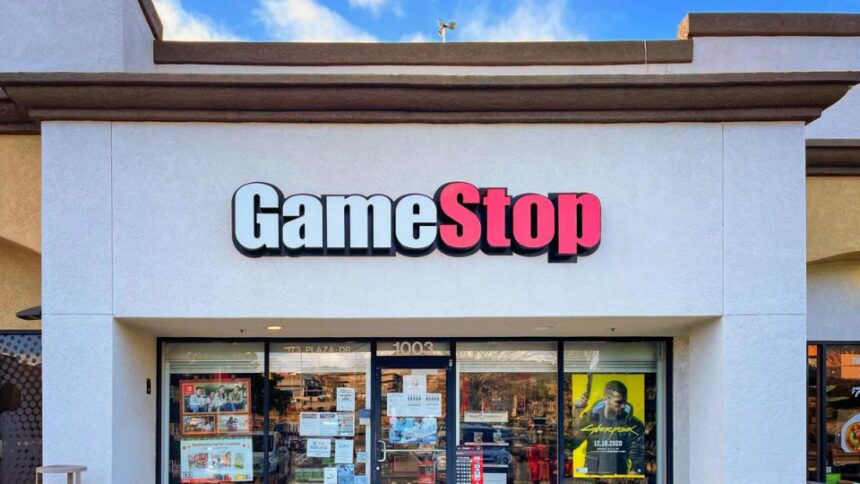
In a strategic move aimed at significant growth, GameStop (GME) is making headlines with its proposed $55.5 billion acquisition of online marketplace eBay (EBAY). This ambitious bid has raised intriguing questions about the role of GameStop’s bitcoin holdings in financing the acquisition. Currently, GameStop boasts approximately $368 million in bitcoin, which could potentially be tapped to support the deal’s hefty price tag.
The video game retail giant submitted a non-binding offer on Sunday, proposing to acquire eBay at $125 per share in cash and stock. This represents an impressive 46% premium over eBay’s share price as it stood in early February, and marks a significant uptick in GameStop’s interest in the online marketplace. According to company disclosures, GameStop has built a 5% economic stake in eBay through a combination of shares and derivatives.
To fund the acquisition, GameStop plans to leverage its robust balance sheet, which includes $9.4 billion in cash and liquid investments. Additionally, the company is seeking up to $20 billion in financing, with backing from a letter of intent from TD Securities. However, the scale of the acquisition raises the question: will GameStop need to liquidate its bitcoin assets to facilitate this major expansion?
This acquisition strategy aligns with earlier statements from CEO Ryan Cohen, who indicated in February an intent to pursue a “very, very, very big” acquisition of a public consumer firm. While Cohen emphasized that the planned acquisition is “way more compelling than bitcoin,” he did not rule out the possibility of selling the company’s crypto holdings as part of the funding strategy.
In recent months, GameStop revealed it had shifted approximately 4,709 BTC to Coinbase Prime, a platform designed for institutional crypto transactions. This move was part of a covered-call options strategy, allowing the company to maintain its cryptocurrency exposure while creating a potential revenue stream. Following this maneuver, GameStop accounted for its bitcoin haul as “receivables,” contributing to the overall $9.4 billion available for funding the acquisition.
Additionally, Cohen mentioned in an interview with CNBC that the company has the flexibility to issue stock to complete the deal, suggesting multiple avenues for financing the acquisition without over-reliance on liquidating its bitcoin assets.
As discussions regarding the proposed acquisition unfold, the outcome could significantly reshape GameStop’s business model, transforming it into a formidable contender in the e-commerce sector. The decision on whether to retain or sell its bitcoin holdings will not only impact financing avenues but could also mark a pivotal point for GameStop’s long-term investment strategy in cryptocurrency. The evolving situation remains closely watched by investors and market analysts alike.