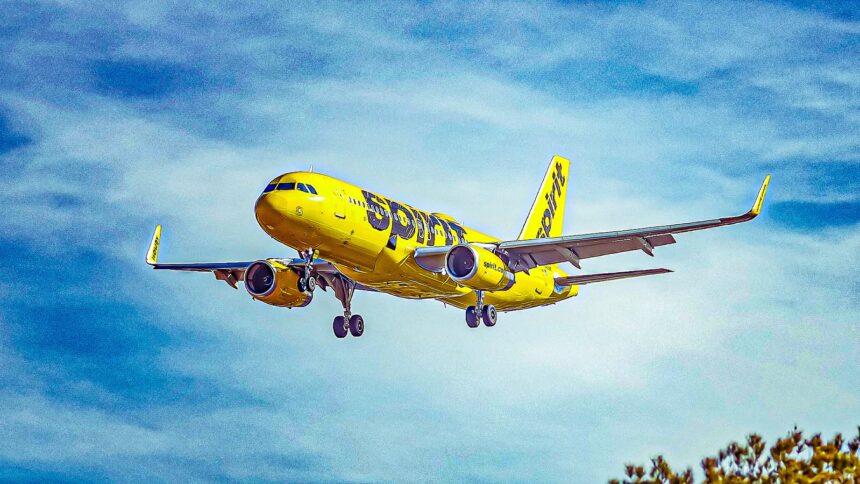
Last week marked a significant turning point in the aviation industry as Spirit Airlines, America’s largest ultra-low-cost carrier, announced it had ceased operations, leaving thousands of passengers and crew stranded nationwide. The sudden shutdown, attributed to long-term financial troubles that escalated during the COVID-19 pandemic, has brought an end to the airline’s turbulent history.
At the time of its closure, Spirit’s fleet, consisting solely of Airbus A320 family aircraft, was scattered across 26 airports in the United States. Notably, the airline had a substantial presence at Fort Lauderdale-Hollywood International Airport, with 17 jets, and 15 at Orlando International Airport, its two primary bases. As the fallout from the collapse unfolds, several aircraft have already been ferried to storage facilities in Arizona, with many more expected to follow.
Despite hopes for a rescue through a government-funded bailout of $500 million, which would have seen the US government acquire a 90% stake in the carrier, negotiations fell through. In recent months, Spirit had already begun reducing its operational scale, cutting routes and parking up to 40 of its aircraft in a desperate bid to stabilize its financial situation.
Airlines typically store aircraft in desert environments due to favorable conditions that minimize the risks of corrosion and rust. This method, seen during the pandemic when many aircraft were taken out of service, allows for cost-effective preservation. The ongoing relocation of Spirit’s jets to Arizona aims to support companies like AerSale at Goodyear, enabling the preservation of these aircraft for potential future operators.
Most of Spirit’s fleet was leased, allowing lessors to seek new opportunities for these planes. Meanwhile, the airline’s owned Airbus A321-200 aircraft face potential scrapping, with valuable components such as GTF engines drawing interest in the market. Prior to the shutdown, Spirit had already rejected leases for around 87 aircraft as part of its strategy to cut overhead and return planes to their lessors.
As the situation unfolded, data from Flightradar24 indicated that multiple Spirit aircraft were en route to Arizona from major cities like Houston, Fort Lauderdale, and Miami. Fort Lauderdale and Orlando had the highest concentration of stranded Spirit planes, with Dallas/Fort Worth and Newark tied for third. The status of the stranded aircraft at other airports illustrates the widespread impact of Spirit’s operational shut down.
The extensive list of airports affected highlights the far-reaching implications of this closure on the air travel network. Beyond the immediate disruption to passengers and workers, Spirit’s exit from the market signals a deeper examination of the budget airline sector, especially in light of ongoing economic challenges in the post-pandemic world.
As the aviation industry absorbs this shock, stakeholders and regulators will likely reassess the viability of ultra-low-cost carriers in the current economic landscape.