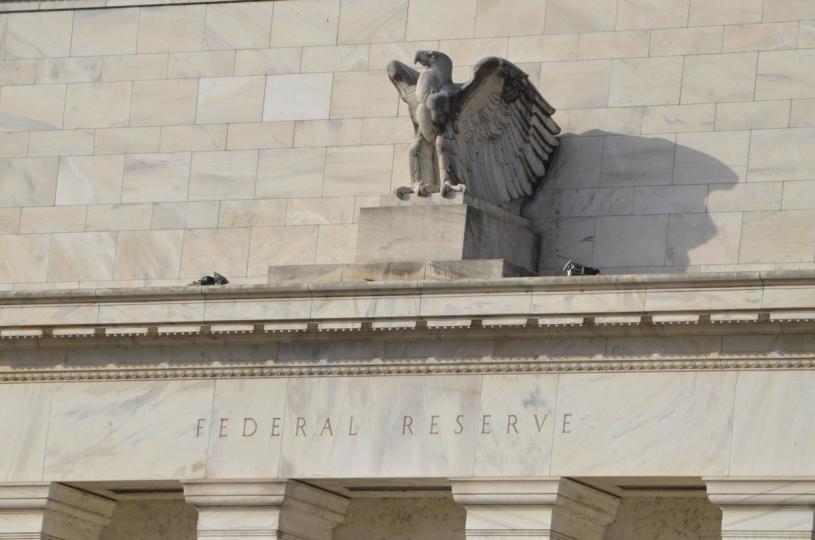
Expectations surrounding U.S. monetary policy are experiencing a notable shift, yet bitcoin, currently priced at approximately $80,592.79, seems largely unaffected by these changes. The cryptocurrency has managed to surpass the $80,000 threshold, indicating that the macroeconomic pressures related to interest rates may no longer significantly impact its price movements.
A growing consensus among major brokerages now suggests that the Federal Reserve will maintain steady interest rates throughout the year, contrary to earlier predictions that anticipated at least two rate cuts. On Monday, Barclays adjusted its forecast, pointing to persistently high energy costs driven by geopolitical tensions in Iran as a contributing factor to inflation. This sentiment is echoed by other financial powerhouses, including JPMorgan, which have also revised their outlook against potential policy easing.
Typically, a prolonged high-interest rate scenario would exert downward pressure on risk assets. However, bitcoin appears to defy this trend. Analysts suggest that the cryptocurrency is increasingly viewed as a hedge against inflation, buoyed by ongoing investments in spot exchange-traded funds (ETFs) amidst escalating inflation concerns. Nonetheless, some skeptics attribute bitcoin’s rally more to robust performance in equities rather than any fundamental shift in demand for cryptocurrencies.
Market momentum currently leans towards bullish investors. Ashish Singhal, co-founder of the FIU-registered CoinSwitch exchange, noted that traders are closely monitoring the $81,500 resistance level. Additionally, a CME futures gap around $84,000 has been identified as a critical zone for potential upward movement. The 200-day simple moving average (SMA), generally regarded as a pivotal point between bullish and bearish trends, is situated near $83,430, suggesting that a decisive move above this level could bolster the case for further gains.
The overall cryptocurrency market shows selective strength, with bitcoin’s recent increase of approximately 2% bringing its price to around $80,700. This surge is accompanied by significant movements in various altcoins; Toncoin has eccentrically risen around 35%, while MORPHO and PENGU have seen gains of 11% and 9%, respectively. Conversely, Dash has experienced a slight decline. Notably, larger tokens like ether, XRP, and solana have mirrored bitcoin’s gradual ascent.
Investor sentiment stands at a crucial juncture, with the Crypto Fear and Greed Index reaching a midpoint score of 50, a level last observed in mid-January. Alex Kuptsikevich, chief market analyst at FxPro, remarked on this critical turning point: “Since last October, there have been only brief surges in sentiment to higher levels, but these have provided excellent opportunities for bears to sell at higher prices.”
In the wider economic landscape, Brent crude oil is holding steady near $114 a barrel amid ongoing tensions in the Middle East, while Maersk has reported that one of its vessels successfully passed through the Strait of Hormuz under U.S. military protection. Other geopolitical tensions are palpable, with the European Union poised to counter any unilateral moves by former President Donald Trump regarding tariffs on EU-made vehicles.
Overall, bitcoin is currently at a pivotal price point, following a previous sharp sell-off that brought it down to around $60,000 earlier this year. The cryptocurrency has been steadily climbing back above the $80,000 mark, forming a well-defined rising channel characterized by consistent higher lows and highs. As it approaches the upper boundary of this channel, the potential for a breakout or a pullback remains to be seen, especially with bulls currently in control and near a significant technical test.