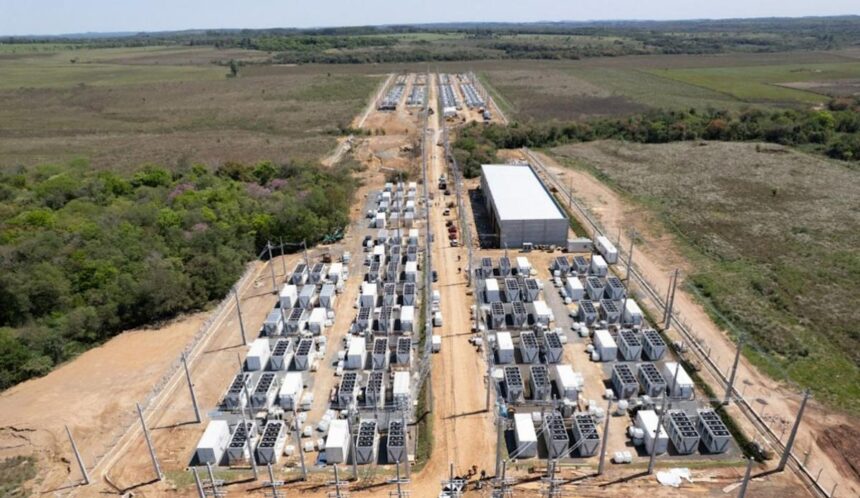
In a landscape dominated by the escalating demand for artificial intelligence infrastructure, the question remains whether existing digital infrastructure operators can successfully pivot to meet these specific needs. HIVE Digital Technologies Ltd, renowned primarily for its Bitcoin mining operations, is actively navigating this transition. The company operates hydro-powered data centers across Canada, Sweden, and Paraguay, boasting a current capacity of 440 megawatts with plans to extend this to 540 MW. Initially constructed for cryptocurrency mining, this infrastructure is now being adapted for high-performance computing (HPC) workloads, a critical component for AI applications.
The urgency for this shift is underscored by industry forecasts indicating potential power supply gaps in the coming years. Hyperscale AI facilities often require hundreds of megawatts of continuous power, and the timeline to establish new capacity can span several years. As such, existing operational power sources are becoming increasingly valuable.
Frank Holmes, executive chairman, highlighted that the perception of AI is often limited to applications like chatbots, but its scope is vastly wider. He emphasized the essential role that data centers play in enabling real-time communication and entertainment platforms like Netflix.
Currently, HIVE manages two interconnected business segments: Bitcoin mining, which remains the dominant revenue driver, and an emerging focus on AI-related computing. The company reported $88.2 million in revenue from Bitcoin mining in its most recent quarter, yielding 885 Bitcoin and achieving a remarkable 41% increase in average hashrate. Overall revenue for the quarter reached $93.1 million, up a staggering 219% year-over-year, with gross operating margins climbing from 18% to 35%.
The nascent BUZZ HPC segment, while smaller, is growing rapidly and is integral to HIVE’s long-term strategy. In its latest reporting period, BUZZ HPC generated $4.9 million in revenue and secured $30 million in two-year contracts linked to a planned deployment of 504 NVIDIA B200 GPUs. HIVE anticipates reaching a target of $225 million in HPC revenue by late 2026.
HIVE’s strategy leverages the intersection of Bitcoin mining and AI data centers, both of which demand substantial power, cooling, and physical space. Rather than investing in new facilities, the company aims to repurpose parts of its existing data centers for higher-value AI workloads.
The financial rationale is clear: AI workloads tend to yield greater revenue per megawatt compared to cryptocurrency mining, albeit requiring a higher initial investment, especially in GPUs and cooling systems. By maintaining its Bitcoin operations, HIVE secures cash flow while selectively enhancing its sites to support AI applications, thereby mitigating capital expenditure intensity.
Holmes outlined a cautious approach, emphasizing contract security prior to hardware deployment and steering clear of speculative buildouts. Power accessibility plays a pivotal role in HIVE’s strategy, with its 440 MW capacity already grid-connected and predominantly hydro-powered, setting the company apart from competitors.
Although not all existing capacity will be immediately suitable for AI workloads, and upgrades may necessitate time and investment, existing infrastructure offers a significant advantage in a market where new data center projects can take years to develop.
HIVE is also positioning itself to benefit from the growing emphasis on domestically controlled computing infrastructure, a trend accelerated by geopolitical events and local government initiatives for AI investment. The Canadian federal government has already committed funding to support this sector, and HIVE has responded by acquiring a 7.2 MW data center in Toronto, with ambitions to upgrade it to Tier III standards.
To facilitate its transitional efforts, HIVE successfully raised $115 million through 0% exchangeable senior notes due in 2031, a move designed to preserve cash flow in the short term. In terms of growth, management projects that annualized HPC revenue could approach $200 million within a year, marking a significant increase from the current quarterly rate of $4.9 million.
Holmes elaborated on the company’s evolution, noting that it currently serves around 10,000 customers in 80 countries and is on track to reach approximately $3 million in monthly revenue. By this time next year, HIVE estimates it could add more than $100 million, potentially nearing $200 million, to its reach.
Moreover, HIVE points to a notable valuation disparity compared to its US-listed counterparts, a gap largely attributed to differences in investor access and index inclusion. As more companies migrate to US indices, this valuation gap may narrow, potentially leading to significant market re-ratings.
In summary, HIVE is strategically repositioning from a Bitcoin-centric model to a more diversified digital infrastructure company, integrating an existing portfolio of power-connected facilities with an emerging AI compute business. The success of this transition hinges on efficient capital deployment, infrastructure conversion, and a balanced revenue model as the company continues to navigate its dual focus on Bitcoin and AI.