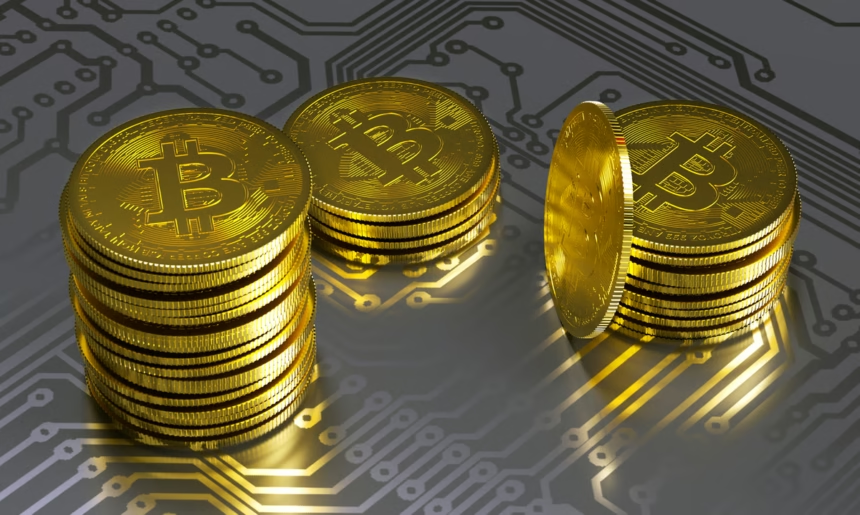
Bitcoin, the world’s leading cryptocurrency, is often lauded for its scarcity, which derives from its energy-intensive proof-of-work (PoW) consensus mechanism. Initially launched in 2009, Bitcoin mining began with simple CPUs. However, the increasing complexity and competition have pushed miners to adopt more advanced technologies. Today, the process requires powerful application-specific integrated circuits (ASICs) capable of solving intricate cryptographic puzzles, with miners earning Bitcoins as rewards.
The anticipated mining rewards undergo a systematic reduction approximately every four years, known as “halving.” This event serves to limit the supply of new coins and makes mining less profitable over time. Bitcoin has experienced four such halvings to date, occurring in 2012, 2016, 2020, and the next one scheduled for 2028. As of now, over 20 million of the maximum 21 million Bitcoins have been mined, yet the last coin is not expected to be mined until 2140.
Bitcoin trades similarly to precious metals, with its value influenced by mining difficulty and a finite supply. Proponents, or bulls, assert that Bitcoin may evolve into a viable alternative to gold and other hard commodities, especially as fiat currencies like the U.S. dollar face devaluation due to expansionary monetary policies. The introduction of spot price ETFs in early 2024 is anticipated to simplify investments in Bitcoin for both retail and institutional players, potentially increasing its adoption.
In recent trading, Bitcoin showed a modest increase of 1.97%, bringing its current price to approximately $81,629, with a market capitalization of $1.6 trillion. Its trading range for the day fluctuated between $79,750 and $81,674, with a broader 52-week range from $60,255.56 to $126,079.89.
On the contrary, skeptics or bears argue that Bitcoin faces significant challenges that could impede its relevance amid a plethora of digital alternatives. These alternatives include gold-backed cryptocurrencies like PAX Gold, developer-centric currencies such as Ethereum, and stablecoins tied to traditional fiat currencies. Additionally, the rapid advancement in quantum computing poses a potential threat; these systems could one day unravel Bitcoin’s cryptographic security, making it less appealing in comparison to tangible assets like gold and silver.
Moreover, Bitcoin has struggled to differentiate itself from the wider cryptocurrency market, which, along with other speculative assets, has seen investors retreat from Bitcoin as a safe-haven option amid prevailing macroeconomic challenges. This trend suggests that the upcoming halvings may not significantly influence its short-term price movements.
As questions arise about the timing of investments, some experts propose that, while not urgent, buying Bitcoin gradually over the next two years could be prudent, especially considering its established status as the most recognized cryptocurrency attracting varied investor profiles, including retail buyers, institutions, and even government entities.