Ripple has made significant strides in 2026, sealing ten major partnerships with formidable financial institutions, including Germany’s Deutsche Bank, JPMorgan, and Mastercard’s extensive payment network. The company also expanded its footprint in Brazil, launching its full financial suite, marking what it describes as its largest single-country expansion to date. Overall, Ripple has established about 17 partnerships this year, including smaller collaborations.
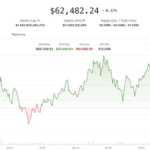
Despite these advancements, the market has not responded positively to XRP’s value, which has plummeted 41% from its January high of $2.42, currently trading at $1.40. This has raised concerns among XRP holders about which partnerships might influence the token’s price. To assess this, each deal has been evaluated based on its significance to Ripple and its potential to affect XRP’s value.
The first quarter of 2026 has been particularly fruitful for Ripple, with notable transactions occurring within just a few weeks. The momentum began on February 11 with Aviva Investors, which opted to tokenize traditional funds on the XRP Ledger, marking the firm’s entry into the tokenization space. This was quickly followed by Société Générale’s digital arm, SG-FORGE, selecting XRPL as a platform for its compliant euro stablecoin.
The pace continued with Deutsche Bank’s announcement of its intent to integrate Ripple’s technology for cross-border payments. While Deutsche won’t utilize XRP directly, it adds credibility to Ripple’s offerings. March saw Mastercard join Ripple’s Crypto Partner Program, integrating it into a $9 trillion network, a move designed to enhance cross-border remittances and B2B payments—a core focus for Ripple.
Brazil’s launch, which took place shortly after Mastercard’s announcement, brought five integrated products and six institutional partners, including Banco Genial and Braza Bank. This represented Ripple’s most extensive expansion within a single country, further solidifying the company’s institutional backing.
As Q2 unfolds, Ripple’s success continues, albeit in a different context. The second quarter has already seen partnerships with Convera, a spinoff from Western Union, and major players from South Korea such as Kyobo Life Insurance and Kbank. Convera’s agreement involves a process termed the “stablecoin sandwich,” which streamlines cross-border payments.
In May, a significant collaboration involved JPMorgan and Mastercard, achieving a near real-time settlement of U.S. Treasury redemptions via XRPL—marking a critical point where a private blockchain connected with a public layer-1 chain.
However, a breakdown of these ten deals reveals a concerning trend for XRP holders. Many of these agreements do not directly increase demand for XRP. For instance, while Deutsche Bank and Mastercard are integrating Ripple’s software, they are not using the XRP token itself. Similarly, the partnerships primarily enhance Ripple’s reputation but do not contribute to XRP’s liquidity or value directly.
The overall assessment indicates a lack of direct demand generation for XRP, with its only role being limited to transaction fees within the Ripple ecosystem. This minimal use is insufficient to significantly bolster XRP’s price.
Future impacts on XRP could hinge on the anticipated passage of the CLARITY Act, which may provide a legal framework for XRP’s classification as a commodity. This legislation, which is slated for a Senate Banking Committee markup, could enable larger institutions to leverage XRP for settlements on a broader scale.
In conclusion, while Ripple’s integrations into the financial system are progressive and establish substantial market credibility, the current landscape shows no immediate uptick in XRP’s value, contrary to the promising deals Ripple has established throughout the year. The true impact on XRP’s price remains contingent on legislative developments regarding its regulatory status.