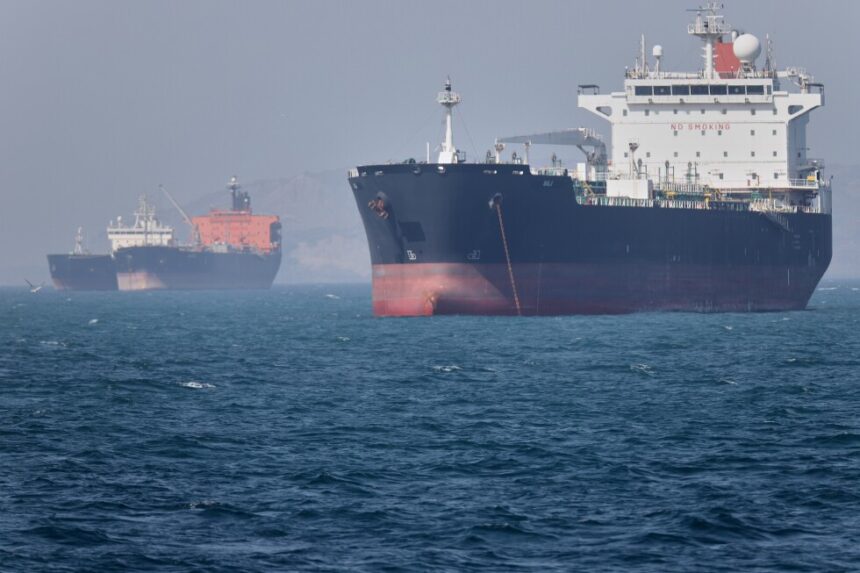
Aramco, the world’s largest oil company, has reported a significant increase in its profits for the first quarter, attributing a 25% rise to disruptions in oil supplies caused by the ongoing conflict involving Iran. The Saudi Arabian firm, based in Dhahran, highlighted its strategic adaptation to the crisis, including rerouting some oil exports to a pipeline to bypass the Strait of Hormuz, a critical waterway now affected by the war.
As of Sunday, Brent crude prices experienced a boost of 2.58%, reaching $103.91 per barrel. Although this figure is lower than the peak of over $119 seen during the height of the conflict, it remains considerably elevated compared to the approximate $70 benchmark observed in late February, prior to the escalation of hostilities.
Aramco President and CEO Amin Nasser announced that the company’s East-West Pipeline, which stretches from Saudi Arabia’s eastern oil fields to the Red Sea, is now operating at full capacity, exporting 7 million barrels of oil per day. Nasser emphasized the pipeline’s role in alleviating the impact of the ongoing energy crisis, stating it provides essential relief to global customers.
Despite this achievement, the volume transported through the East-West Pipeline constitutes only a portion of Aramco’s overall production capabilities. For context, the company reported an output of 11.1 million barrels of oil per day in the fourth quarter of 2025.
For the quarter ending March 31, Aramco declared profits amounting to $32.5 billion, marking a robust 25% increase compared to the same timeframe the year before. Nevertheless, the company had faced a 12% decline in annual profits during the fiscal year 2025.
Prior to the conflict, around 20% of the world’s traded oil flowed through the Strait of Hormuz daily, alongside substantial supplies of natural gas, fertilizers, and other petroleum products. The geopolitical landscape changed significantly when Iran asserted control over this vital route following attacks by U.S. and Israeli forces on February 28. The situation has been further complicated by a U.S. naval blockade introduced last month.
Nasser remarked on the current events, asserting that they have underscored the crucial role of oil and gas in maintaining energy security and propelling the global economy. He reiterated the importance of a stable energy supply during these challenging times, assuring that Aramco remains committed to its strategic goals while utilizing both its domestic infrastructure and international connections to navigate these disruptions effectively.