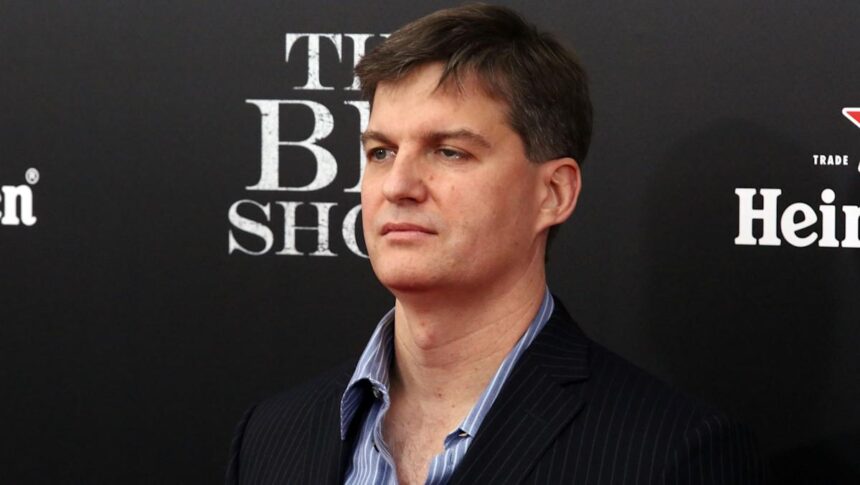
Michael Burry, the prominent investor known for predicting the U.S. housing crash in 2008, has expressed deep concerns about the current state of the stock market. Burry, whose foresight inspired the film “The Big Short,” believes that the prolonged rally in the market may be nearing its end, potentially leading to a significant downturn.
In a recent post on Substack, Burry described experiencing a sense of déjà vu regarding market conditions, particularly drawing parallels to the late stages of the dot-com bubble. He pointed to a recent turnaround in the NASDAQ 100 as a key indicator of their condition, stating, “The market has jumped the shark.”
Burry’s bearish outlook stems from what he sees as a narrow focus among investors, who, he claims, are overlooking crucial economic data and global events to concentrate solely on artificial intelligence (AI). He remarked, “Absolutely non-stop AI. Nobody is talking about anything else all day,” after tuning into financial radio during a long drive. He criticized the market’s upward trajectory, suggesting it is driven less by genuine economic fundamentals and more by the momentum of previous gains, saying, “Stocks are not up or down because of jobs or consumer sentiment. They are going straight up because they have been going straight up.”
Despite his historical record of accurately predicting downturns, Burry acknowledged his past missteps in forecasting crashes, admitting that he has sometimes misjudged the market. He humorously compared himself to the “boy who cried wolf,” reflecting on the skepticism surrounding his warnings. “I have become the boy who cried wolf,” he stated, but he also emphasized his successful predictions in 2000, 2007, and 2019, alongside calling the meme stock crash in mid-2021.
Burry is not alone in his apprehension regarding market health. Renowned investor Paul Tudor Jones echoed similar sentiments during a CNBC interview, noting that current market conditions feel reminiscent of 1999, the year before the dot-com crash. He acknowledged the potential for continued growth over the next year or two but warned that such gains could lead to astonishing corrections in the future.
As experts watch the current landscape, Burry’s insights serve as a cautionary reminder, inviting investors to contemplate the various factors shaping today’s stock market—a landscape heavily influenced by trends in AI and market momentum rather than solid economic indicators.