After an extensive three-week trial that has revealed intricate details of Silicon Valley’s tech landscape, the judgment in the high-profile Musk v. Altman case is imminent. OpenAI concluded its case on Wednesday, with closing arguments scheduled for Thursday morning, after which the jury is expected to commence deliberations.
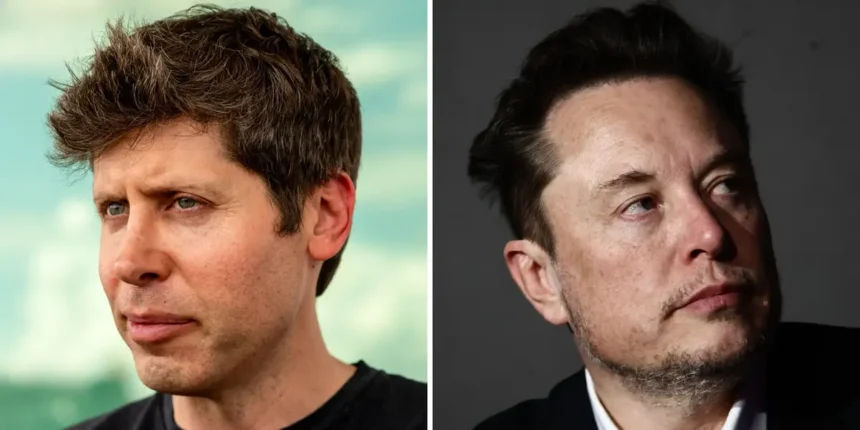
At the heart of the trial are allegations from Elon Musk against OpenAI’s Sam Altman and Greg Brockman, accusing them of “looting” the charity they co-founded in 2015. OpenAI has countered that Musk’s claims stem from “jealousy,” highlighting that he left the organization in 2018 after failing to gain control over its direction.
During the trial’s final day of testimony, OpenAI presented several executives to underscore the necessity of partnering with major tech firms like Microsoft to maintain competitiveness against industry giants like Google and Anthropic.
One of the standout witnesses, Joshua Achiam, OpenAI’s Chief Futurist, recounted a tense moment from a company meeting in 2018 when Musk announced his exit to develop his own competing AI system. Achiam expressed concerns about the potential dangers of Musk’s rapid approach, which led to a heated exchange, prompting Musk to call him a “jackass.” This confrontation was later corroborated by a trophy, a small golden jackass inscribed with an encouraging message for Achiam. Although the trophy was meant to serve as tangible evidence, the presiding judge declined to admit it into the record.
The trial also featured contrasting expert testimonies regarding OpenAI’s partnership with Microsoft, worth approximately $13 billion. Musk’s expert argued that the partnership was detrimental, suggesting it undermined OpenAI’s nonprofit foundation. However, OpenAI’s expert, John Coates, effectively turned the testimony against Musk by citing the significant value generated by the partnership, estimating it to be around $200 billion.
Jurors also learned about internal concerns within Microsoft regarding the potential backlash from early OpenAI investors following the shift toward a for-profit model. Microsoft’s Chief Technology Officer, Kevin Scott, was questioned about an email he wrote in 2018, expressing skepticism about how key donors, particularly LinkedIn co-founder Reid Hoffman, might react to this transition. He clarified that his concern was primarily about Hoffman, not Musk.
Additionally, OpenAI’s legal team revisited testimonies from former executives previously critical of Altman, reframing their statements to suggest that these individuals had also supported the strategic partnerships with Microsoft that are central to Musk’s allegations.
As the trial nears its conclusion, all eyes are on the jury as they prepare to deliberate, potentially shaping the future of AI development and governance in Silicon Valley.