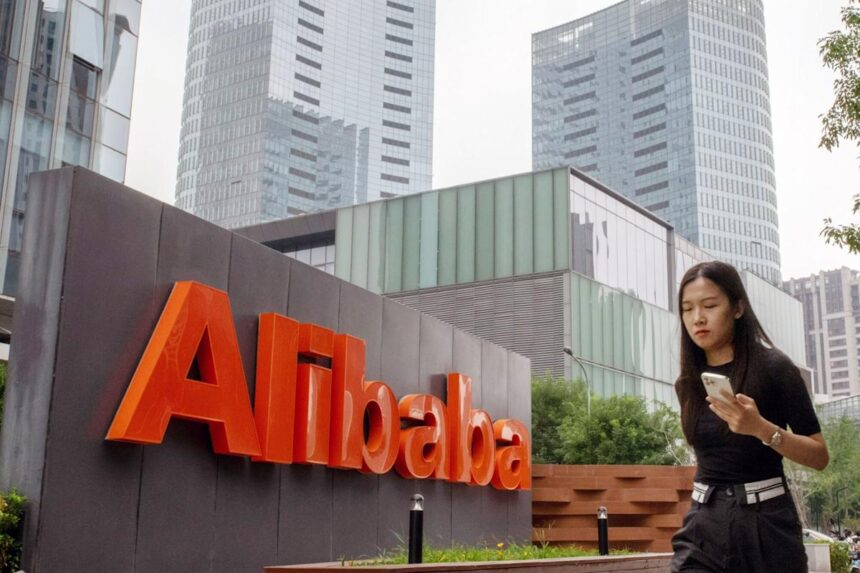
China’s leading technology firms, Alibaba and Tencent, are making strides in the artificial intelligence (AI) sector, despite facing challenges in monetizing their investments. Recently, Alibaba reported its first operating loss since the pandemic, attributing part of this setback to significant investments in AI. CEO Eddie Wu indicated that the company is prioritizing AI development over immediate profit, planning to spend substantially more than previous targets. He projected that the company’s annual recurring revenue from AI services could rise from 10 billion yuan ($1.5 billion) to 30 billion yuan by year-end. Following this announcement, Alibaba’s shares saw an increase of about 8% in Hong Kong.
On the other hand, Tencent revealed its slowest revenue growth in over a year, yet managed to outperform Alibaba due to robust performance in its advertising and gaming divisions. Tencent’s shares experienced a 3.7% increase, demonstrating resilience in a competitive market landscape.
Both companies are navigating the complex environment of AI commercialization amidst increasing investor pressure to deliver tangible returns from their hefty investments. Despite the competitive landscape, where rivals like Moonshot and MiniMax are gaining traction, executives from both firms reassured investors of a forthcoming payoff from their AI initiatives.
Analysts from Citigroup noted that Alibaba’s investments, although currently weighing on profits, are part of a strategic long-term approach to capitalize on significant growth opportunities in AI. They highlighted a remarkable triple-digit growth in AI-related cloud revenue for the 11th consecutive quarter. Alibaba has committed approximately 380 billion yuan ($56 billion) towards AI over three years. This year, the company is concentrating on monetizing its AI technologies, ranging from cloud services to AI agents, and has raised prices for its offerings.
As part of its strategy, Alibaba has established the Alibaba Token Hub, aimed at consolidating various research and consumer product functions. The company is also integrating its AI app with its e-commerce platforms to enhance growth, raising service prices by up to 34% in the process.
Further expanding its ambitions, Alibaba is on a path to develop end-to-end AI capabilities, including hardware. Plans are in place to list its chip-making unit, T-Head, to attract investors interested in alternatives to Nvidia Corp., following a successful partnership with China Unicom.
Despite these efforts, Tencent has seen a significant decline in market value, losing approximately $160 billion this year. Investors are increasingly attracted to specialized AI firms, which have seen their valuations soar since entering the market.
Tencent, based in Shenzhen, recently upgraded its foundational AI model, Hunyuan. This update represents a key development under the guidance of Yao Shunyu, who previously worked with OpenAI. The model has gained traction, driving demand on the distribution platform OpenRouter. Additionally, Tencent’s DeepSeek is supporting its ChatGPT-style chatbot, setting it apart from domestic competitors.
Challenges remain for both giants, as they face intense external competition. Alibaba is caught in a downturn due to aggressive discounting from rivals like Meituan, while Tencent vies for market share against ByteDance’s TikTok. Nonetheless, Tencent’s AI initiatives have boosted advertising sales growth, achieving a growth rate of 19.8% in a challenging environment.
The dynamics of AI investment in China are marked by a delicate balance of innovation and competitive struggle, highlighting both the promise and challenges that lie ahead for these tech titans.