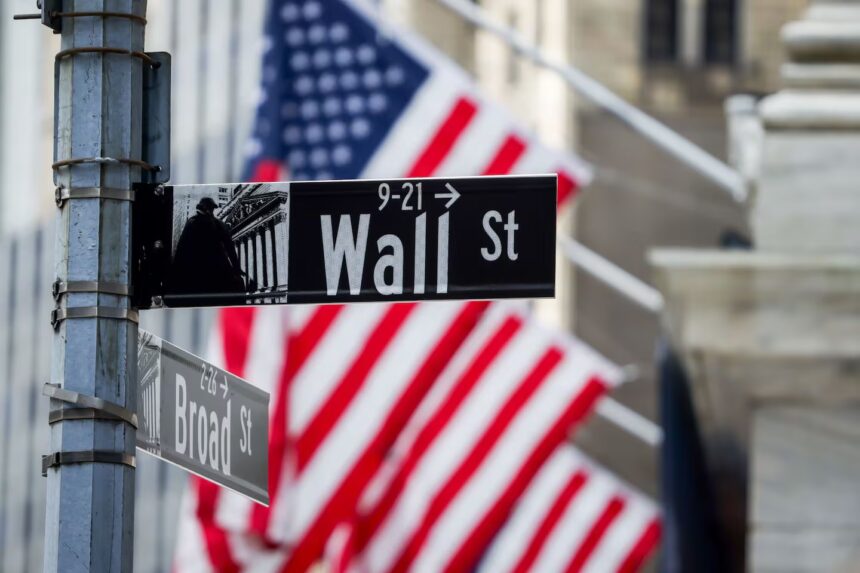
On Wednesday, the Standard & Poor’s 500 index and Nasdaq achieved record highs, driven by optimism surrounding major technology firms, advancements in artificial intelligence, and robust corporate earnings reports. In contrast, rising interest rates fueled by inflation concerns are creating uncertainty in the financial landscape. The yield on 10-year Treasuries—often used as a benchmark for mortgage rates—soared to 4.46 percent, the highest level since July.
The situation raises questions about the sustainability of this stock market rally, particularly as economic indicators suggest increasing inflation. The Consumer Price Index surged in April at its fastest annual rate in nearly two years, primarily due to skyrocketing oil prices. Investors in fixed income markets are increasingly wary that the Federal Reserve will delay interest rate cuts or even consider raising rates.
Economic analyst David Kelly, chief global strategist at J.P. Morgan Asset Management, recently discussed the paradox of rising stock prices amid economic and political instability. He noted that the current economic landscape can be characterized as a “K-shaped economy,” where the wealthy are flourishing while others struggle. This disparity has led affluent investors to significantly invest in the stock market, accompanied by consistent contributions from retirement accounts like 401(k)s and IRAs. The long-standing trend of high returns has made investors hesitant to sell and incur capital gains taxes, noting, “It’s easy to get into the market, but it’s harder to get out,” according to Kelly.
Historically, the S&P 500 has provided an average annual return of nearly 15 percent, including dividends, from 1978 through 2025, with real gains—after adjusting for inflation—just below 11 percent. This year alone, the index has recorded a return of 9.2 percent, a stark contrast to less than 1 percent during the same period in the previous year. Beyond the boom in technology stocks, a critical factor contributing to the sustained growth of the market is the decrease in the total number of U.S.-traded stocks, which has halved since late 1997 to approximately 3,620 as of the end of 2025. The decline is attributed to various factors, including acquisitions, a trend toward remaining private longer, a reduction in initial public offerings, and rising regulatory costs.
Additionally, a noteworthy trend has emerged in stock buybacks. Data from J.P. Morgan indicates that the value of share repurchases has surged by 38 percent in 2025 compared to the previous year. Such buybacks effectively decrease the number of shares available in the market, typically leading to an increase in the value of those that remain.
Sector performance has also been telling. Energy stocks have soared by 28 percent this year, largely driven by a 76 percent increase in the benchmark price for U.S. crude. Conversely, information technology stocks have experienced a 17 percent uptick, with chip manufacturers benefiting from heightened demand for processors essential for AI applications and data center growth. On the other hand, health care stocks have dipped 5.4 percent due to efforts to lower drug prices, while financial stocks have fallen by 7 percent amid concerns about private credit and possible Federal Reserve interest rate hikes.
Looking back at historical trends, bear markets have occurred approximately every five years since 1945, with the most recent concluding in October 2022. Although the structural changes discussed by Kelly have contributed to the current bull run’s resilience, he cautioned that market reversals are inevitable. He proposed that worsening wealth inequality could lead to a populist backlash, resulting in increased taxation on the affluent, which could negatively impact market flows.
The insight into the growing divide in wealth prompts a critical question: “How extreme does the K-shaped economy have to get before it causes a revolution?” This sentiment is rarely expressed on Wall Street, highlighting a growing concern about the long-term sustainability of current economic trends.