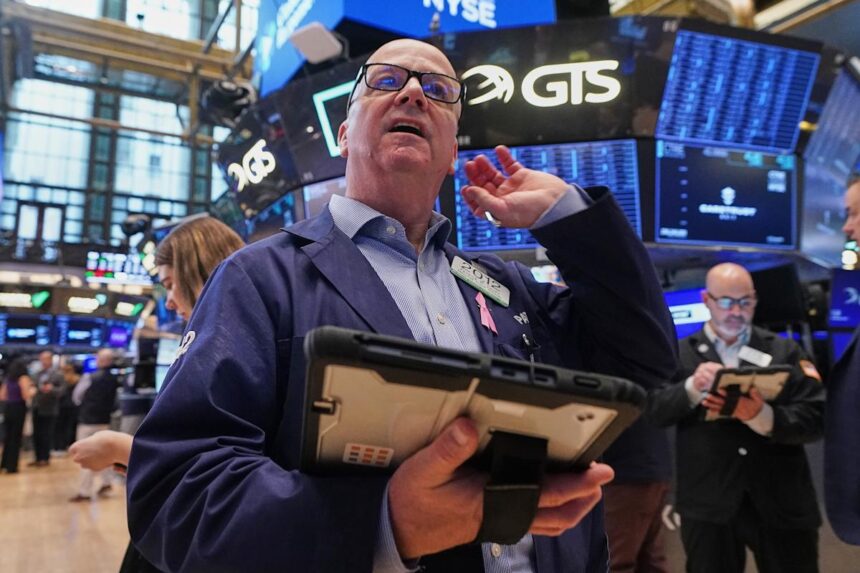
US stocks made notable gains on Thursday as President Trump and Chinese President Xi Jinping launched their highly anticipated summit, with a focus on trade relations and advancements in artificial intelligence (AI). The Dow Jones Industrial Average surged by 0.8%, while the S&P 500 and Nasdaq Composite indices rose by 0.3% and 0.2%, respectively. This uptick followed a record-setting day on Wall Street. Notably, shares of Nvidia rose by over 2%, driven by reports of bolstered demand for AI technologies.
As the summit commenced, both leaders emphasized the importance of enhancing US-China relations. Trump and Xi are expected to discuss various significant issues, including tariffs and technology transfer policies. During the meeting, Xi extended a warm welcome to prominent American CEOs, including Nvidia’s Jensen Huang, Tesla’s Elon Musk, and Apple’s Tim Cook. He encouraged them to engage more deeply in China’s ongoing reform and opening-up initiatives, asserting that “China’s door will only open wider.”
In addition to trade discussions, the summit drew attention to the geopolitical tensions in the Middle East. There are mounting hopes that China could play a role in easing the conflict between the United States and Iran, especially as increased tensions have driven up oil prices and raised concerns about inflation domestically.
The release of US retail sales data further illustrated economic trends, as higher fuel prices influenced a rise in sales. The numbers suggested that the ongoing conflict in the Middle East is impacting economic conditions at home.
On the corporate front, Cisco Systems experienced a significant jump in its stock value after reporting quarterly earnings that exceeded expectations. The company announced a restructuring plan focusing on AI, set to impact approximately 4,000 jobs.
Market conditions were, however, mixed concerning jobless claims, which rose to 211,000 for the week ending May 9, surpassing economists’ expectations of 205,000. Continuing claims saw a minor increase, reflecting ongoing unemployment challenges.
The broader sentiment in the stock market remained optimistic, particularly as the summit served as a platform for discussions that could shape future US-China economic interactions. Many of the business leaders present expressed positive sentiments regarding the dialogue with Xi, who reinforced China’s commitment to engage more collaboratively with American enterprises.
Despite the initial optimism, discussions regarding the conflict in Iran yielded limited progress. In their closed-door meeting, both leaders shared the view that the Strait of Hormuz should remain open and free from militarization. However, key strategic commitments from China in relation to Iran seemed absent, revealing the complexities underlying the diplomatic landscape.
Overall, the summit’s mix of economic and geopolitical concerns highlights the intricate balance both nations must navigate as they address mutual interests while managing competitive pressures. The developments following this summit are likely to set the tone for US and China relations moving forward, with implications for global markets and trade dynamics.