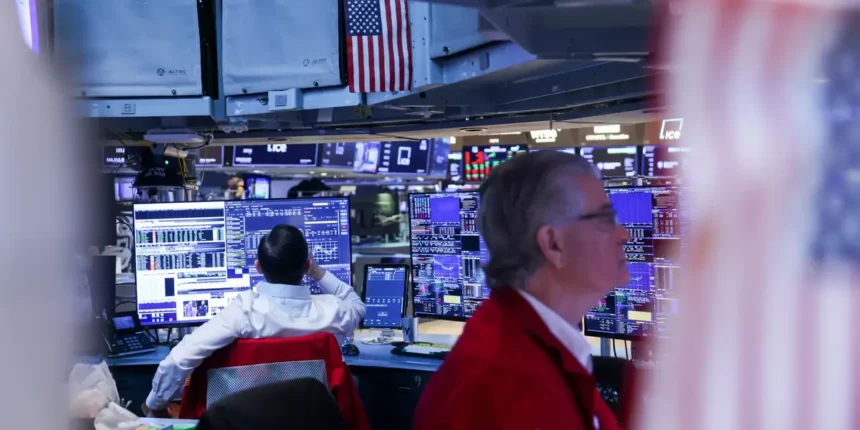
Stocks experienced a significant downturn on Friday, a stark contrast to the strong rally in technology shares that had pushed major indexes to all-time highs earlier in the week. The abrupt drop can be largely attributed to a surge in Treasury yields, which raised concerns among investors regarding inflation risks. Data released earlier in the week indicated that prices are increasing at their fastest rate in recent years, prompting a sell-off in government bonds. The yield on the 10-year US Treasury rose by 12 basis points to 4.57%, while the 30-year yield climbed 10 basis points to 5.11%, marking its highest level in a year. This upward trend in bond yields is not confined to the US, as both Japan and the UK also registered yields at multi-year highs.
Analysts noted that no single event triggered this spike in yields; rather, it resulted from multiple indicators underscoring the persistent inflation challenges facing markets. This development followed the Senate confirmation of Kevin Warsh as the new Federal Reserve chair, appointed by former President Trump. Recent consumer and producer inflation data have dampened expectations for any potential rate cuts from the Fed in the near future, especially since Warsh is anticipated to adopt a more dovish stance compared to his predecessor, Jerome Powell. Market sentiment has shifted significantly, with investors now expecting interest rates to remain steady through the end of the year, contrasting sharply with earlier predictions of two to three rate cuts in 2026.
David Morrison, a senior market analyst at Trade Nation, commented on this shift, stating, “This all reinforces expectations that the Federal Reserve, under the new chairmanship of Kevin Warsh, will be unable to loosen monetary policy further, something which is bound to annoy President Trump.” As a result, major indexes fell, with both the Nasdaq Composite and the S&P 500 down over 1%, reversing gains made earlier in the week.
Bank of America analysts highlighted the unprecedented nature of the economic shocks currently affecting the US, asserting that it has become increasingly clear that inflation poses a substantial problem. This stock market decline coincides with a rise in oil prices due to ongoing tensions in Iran. Brent crude saw an increase of approximately 2.1%, reaching $107.94, while WTI oil rose nearly 2.7% to $103.91. This increase in oil prices followed a meeting between President Trump and China’s Xi, although markets reacted with skepticism regarding Trump’s comments on Iran and the Strait of Hormuz. Investors appeared unconvinced that a resolution to the conflict in the Middle East and associated disruptions in the oil market would materialize soon.
Adding to the complexity of the situation, Trump revealed that China had agreed to purchase US oil, a development that could potentially disrupt current trends affecting oil price stability amid the war. Meanwhile, the US Dollar index climbed to 99.20, its highest point since early April, reflecting the growing tension and uncertainty within global markets.