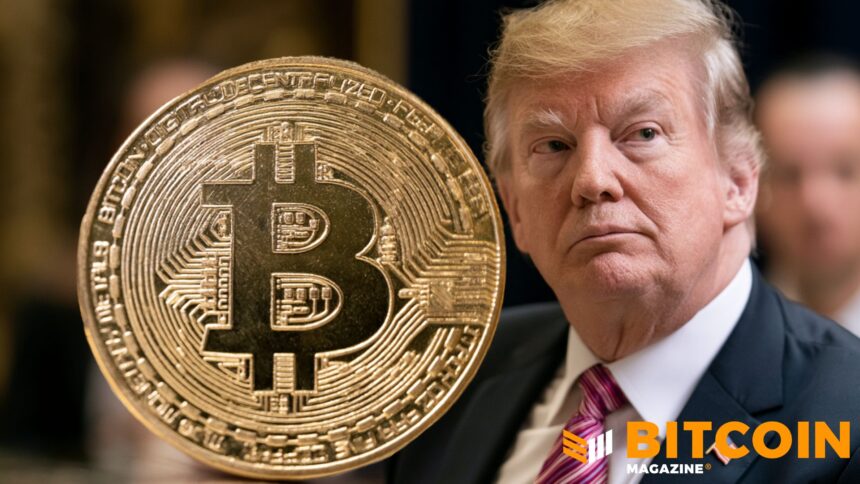
Donald Trump’s family trust engaged in substantial trading activities during the first quarter of 2026, purchasing shares in several bitcoin-linked companies, as revealed in a financial disclosure filed with the US Office of Government Ethics. This move aligns with the Trump administration’s evolving stance towards digital assets, signaling an increasing openness to cryptocurrency markets.
The disclosure, submitted through two Form 278-T reports, detailed over 3,600 transactions carried out from January to March, with a total value estimated between $220 million and $750 million. While much of the activity was concentrated in large-cap technology firms, banks, and index funds, the notable investments in cryptocurrency-related stocks have sparked fresh ethics discussions.
Among the highlighted transactions, the trust made nine separate purchases of Coinbase stock, the predominant crypto exchange in the United States, with the most significant transaction occurring on February 10, valued between $100,001 and $250,000. The involvement in Coinbase emphasizes the trust’s focus on pivotal players within both retail and institutional trading frameworks.
Additionally, the trust made two minor acquisitions in MARA Holdings, one of the largest publicly traded Bitcoin mining firms. The report also indicated trades in Strategy, a company recognized for maintaining a substantial Bitcoin treasury. With eight transactions involving Strategy Class A shares—consisting of both purchases and sales—the trust’s approach reflects active management rather than a passive investment strategy. The largest acquisition in this category ranged from $50,001 to $100,000, while a sale recorded in January was valued at up to $50,000.
Beyond these significant purchases, the trust’s portfolio also included stakes in other fintech and crypto-related entities such as Robinhood, SoFi Technologies, and Block, all of which are interconnected with digital assets through various platforms, payment services, or blockchain projects.
Overall, the crypto-related trades represent a minor portion of the trust’s extensive portfolio, which features considerable investments in industry giants like Nvidia, Microsoft, Apple, Amazon, and Boeing—individual transactions in these sectors reportedly peaking at $5 million. The document indicates strong gains across many of these holdings, particularly following a market rebound after a sell-off in March attributed to geopolitical instability.
Importantly, the filing does not clarify whether Trump personally directed any of these trades. His assets remain in a family trust with management handled by his sons and external brokers. Current ethics regulations mandate the disclosure of transactions but do not prohibit a sitting president from holding or engaging in stock trading.
These disclosures arrive amidst broader legislative discussions, specifically as the Senate Banking Committee advanced the Digital Asset Market Clarity Act with a 15–9 vote. This development saw Democratic Senators Ruben Gallego and Angela Alsobrooks joining their Republican counterparts in supporting the comprehensive crypto market structure bill, despite mounting opposition from lawmakers like Elizabeth Warren, who raised concerns regarding consumer protection, illicit finance, and the ethical implications linked to Trump.
The markup session highlighted an emerging divide among Democrats regarding crypto policy, as a bipartisan group endorsed significant compromises in decentralized finance (DeFi) regulations. Meanwhile, more progressive legislators cautioned that the proposed bill could create vulnerabilities that might weaken anti-money laundering enforcement and securities protections, indicating a complex and contentious path ahead for cryptocurrency legislation.