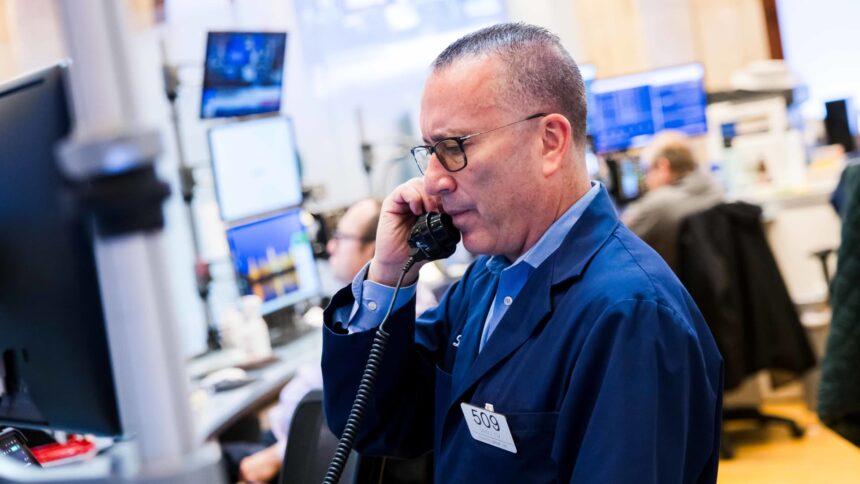
Traders at the New York Stock Exchange were actively engaged on May 7, 2026, as stock futures indicated minimal fluctuations following a week of record-setting performance. The market’s focus is now shifting toward the forthcoming quarterly earnings reports from Nvidia and major retail chains. Meanwhile, the ongoing conflict between the U.S. and Iran looms over investors’ sentiments.
Dow Jones Industrial Average futures experienced a slight decline, dipping by 100 points or 0.2%. In contrast, S&P 500 and Nasdaq-100 futures remained relatively stable, hovering near the flatline. Crude oil prices, however, saw an uptick, with West Texas Intermediate futures rising by 1.8% to $107.26 per barrel, while Brent oil advanced by 1.1% to reach $110.47.
Nvidia is preparing to announce its earnings on Wednesday, alongside retail giant Target, with Walmart scheduled to follow suit on Thursday. These reports come at a crucial juncture for the stock market, which had recently seen the S&P 500 and Nasdaq achieve new record highs. The Dow had briefly reentered the 50,000 range. Nonetheless, Friday marked a notable reversal for major stock averages, as rising sovereign bond yields globally pressured the market. The yield on the U.S. 30-year Treasury bond reached its highest level in nearly a year, echoing similar trends seen in the U.K., where the 30-year Gilt yield hit levels not seen since the late 1990s, along with increases in long-term Japanese bond yields.
The surge in yields coincides with sustained high oil prices and ongoing tensions between the U.S. and Iran. President Donald Trump issued a stern warning over the weekend, stating that Iran must “get moving,” or else “there won’t be anything left,” as negotiations continue to resolve the ongoing conflict.
The rising bond yields severely impacted technology stocks, which had previously driven the market to record highs. The Nasdaq-100 index suffered a 1.5% drop on Friday, marking its most significant one-day decline since late March. New inflation data released last week has further diminished expectations for the Federal Reserve to cut interest rates in the near future.
According to Ed Yardeni, president of Yardeni Research, the prevailing financial climate suggests that “interest rates will remain higher for longer,” despite President Trump’s requests for Federal Reserve Chief Kevin Warsh to lower rates. Yardeni remarked, “The macroeconomic backdrop no longer supports an easing bias, let alone a rate cut,” highlighting the complexities facing investors as they navigate through this unpredictable economic landscape.