Oil prices surged on Monday amid heightened geopolitical tensions, particularly concerning Iran, as U.S. President Donald Trump issued a stark warning regarding the ongoing deadlock in peace negotiations. The international benchmark Brent crude futures for July rose 1.98%, reaching $111.42 per barrel, while U.S. West Texas Intermediate crude for June increased by 2.43%, hitting $107.98 per barrel—the highest price recorded this month.
Trump’s message to Iran, delivered via a post on Truth Social, emphasized that “the Clock is Ticking” for the nation and urged them to act swiftly, or face severe consequences. His remarks suggest a potential escalation in hostilities between Washington and Tehran, with the possibility of renewed military conflict looming over stalled negotiations for a peace deal and the reopening of the vital Strait of Hormuz.
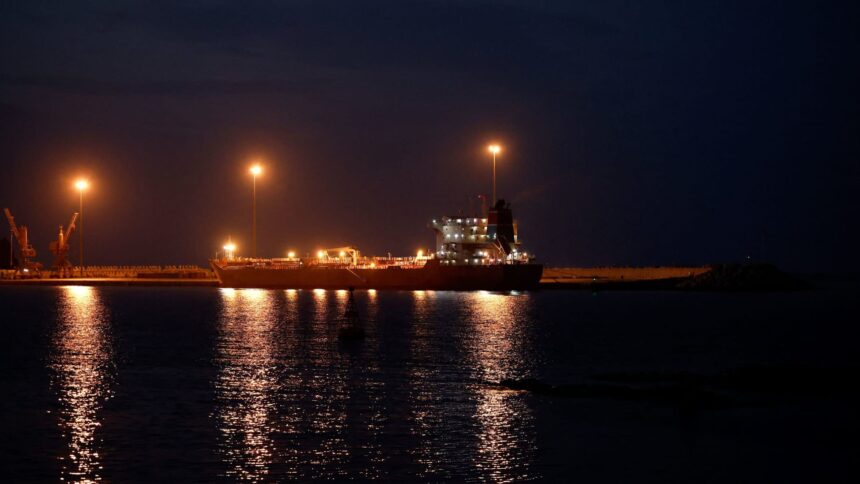
The waterway has been a flashpoint of tension and is crucial for global oil transport, accounting for nearly 20% of the world’s oil and gas supply before the onset of the current conflict. As a fragile ceasefire established in April appears increasingly tenuous, Iran has maintained restrictions on the strait, prompting the Trump administration to enforce blockades on Iranian ports.
The International Energy Agency (IEA) recently warned that global oil inventories are depleting at an alarming rate, exacerbated by the ongoing closure of the Strait of Hormuz. The agency noted that this depletion trend could lead to significant oil price spikes in the near future. Recent projections indicate that inventories could reach an unprecedented low of 7.6 billion barrels by the end of May if oil demand continues at its current pace, as highlighted in a report from UBS, a prominent Swiss bank.
As the situation unfolds, market analysts and energy experts remain vigilant, foreseeing potential ramifications for the oil market and the global economy.