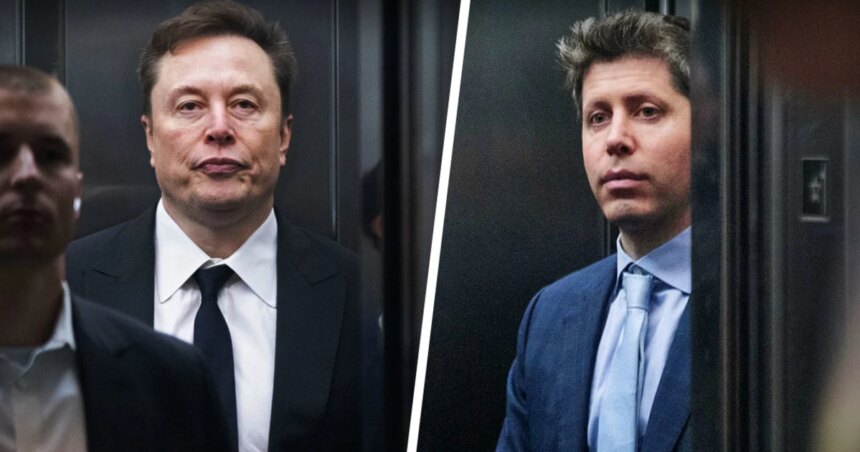
In a significant legal decision that reverberates throughout the tech industry, a federal jury sided with OpenAI CEO Sam Altman and co-founder Greg Brockman, dismissing a lawsuit brought by tech billionaire Elon Musk. The jury’s verdict, delivered on Monday, concluded that Musk had waited too long to file his claims, thereby absolving Altman, Brockman, and the organization itself of any wrongdoing.
The lawsuit, which Musk argued centered on the unlawful enrichment by the defendants at the expense of OpenAI, was ultimately rejected on the grounds of statute of limitations. The jury’s unanimous decision followed a three-week trial that attracted significant attention, raising questions about the future of artificial intelligence development and the business practices within this rapidly evolving sector.
Notably, the jury also dismissed Musk’s allegations that Microsoft, a key investor in OpenAI, had colluded with Altman and Brockman in breaching their fiduciary duties to the nonprofit organization. Musk’s legal team indicated their intention to preserve the right to appeal, though they have yet to outline specific next steps.
According to U.S. District Judge Yvonne Gonzalez Rogers, who oversaw the trial, she accepted the jury’s conclusions. Following the verdict, legal representatives for OpenAI and Microsoft celebrated their victory, noting the clarity of the case’s facts and timeline. Microsoft released a statement welcoming the jury’s dismissal of the claims, reaffirming that the facts were evident from the start.
The verdict effectively maintains OpenAI’s operational status, a company valued at $852 billion following a recent $122 billion capital infusion from investors. This development occurs against the backdrop of OpenAI’s restructuring, which established a nonprofit foundation responsible for business operations while allowing significant ownership stakes for private investors, including Microsoft.
Central to the trial was the question of whether Musk’s timing in filing the lawsuit was problematic. Legal limits stipulated a three-year window for claims tied to breaches of charitable trust and a two-year limit for allegations of unlawful enrichment. Musk filed his lawsuit in 2024, despite discussions among OpenAI co-founders about converting the organization to a for-profit model as early as 2017, which was fully realized in 2019.
During his testimony, Musk expressed that he delayed legal action based on trust in reassurances from Altman and Brockman but felt compelled to act after Microsoft’s significant investment in 2023. He characterized his perception of the situation as evolving, noting, “Thinking that someone might steal your car is not the same as someone stealing it.”
The trial also showcased the wealth and influence within Silicon Valley, as it featured testimonies from six billionaires, reflecting both the stakes involved and the underlying tensions within the tech community. Outside the courthouse, the environment was charged, with demonstrators voicing concerns over AI and wealth inequality, adding a layer of public interest to the proceedings.