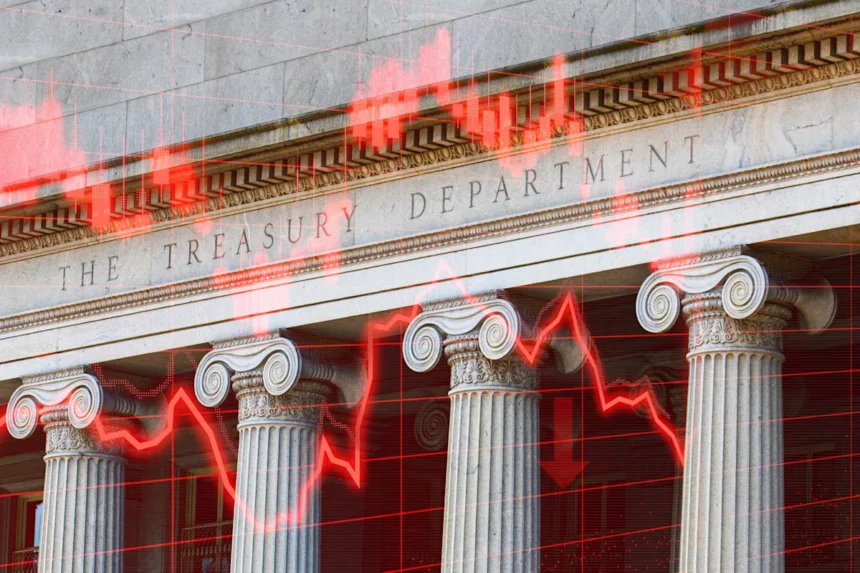
As Treasury yields climb to their highest levels in several years, investors are expressing concern about the broader implications for the financial markets and personal finances. Recent data indicates that the two-year and 10-year Treasury yields are at their highest since February 2025, while the 30-year Treasury yield has exceeded 5%, the highest point since 2007. This resurgence in yields is primarily driven by a mixture of geopolitical tensions in the Middle East, inflationary pressures, and uncertainty following a recent meeting between former President Donald Trump and Chinese President Xi Jinping.
The Federal Reserve Bank of Philadelphia recently released an economic outlook that aligns with the hesitance seen in the bond market. It forecasts subdued growth, a stable unemployment rate, modest employment gains, and persistent inflation, signaling a cautious approach to the U.S. economic landscape.
Treasury yields represent the return investors earn by lending money to the government. For example, a 10-year Treasury note yielding 4.5% means an investor can expect to earn $45 a year for each $1,000 invested over a decade. However, as yields rise, bond prices fall; consequently, higher yields diminish the market value of existing bonds when newer bonds offer more attractive returns. This dynamic complicates the investment landscape, particularly for those considering selling before maturity, as selling may result in financial losses.
Several factors are contributing to the uptick in Treasury yields. The ongoing conflict in the Middle East is fostering fears around inflation, particularly as oil prices have surged. The Consumer Price Index recently reported a 3.8% increase in April, marking the largest rise in three years, reflecting heightened costs for consumers. Additionally, concerns surrounding a growing government deficit and speculation regarding potential rate hikes by the Federal Reserve continue to weigh heavily on market sentiment.
The implications of rising Treasury yields extend beyond the bond market. Equity investors may also feel the impact, as higher yields can constrain corporate borrowing costs, thereby affecting company profits and stock returns. Moreover, if investors can secure a risk-free return of 5% or more from government bonds, stocks may appear less attractive, further affecting market dynamics.
Rising Treasury yields also influence borrowing costs broadly. As the government faces increased interest payments on its debt—expected to balloon by $3.2 trillion over the next decade with just a 1% increase in rates—households may also see higher mortgage rates, further tightening household budgets.
On a more positive note, higher Treasury yields could lead to improved savings returns. While short-term savings accounts more closely follow prime rates, longer-term accounts could benefit from better yields associated with multiyear bonds, enhancing the opportunity for savers.
For those invested in 401(k) plans or IRAs, the volatility within mutual funds and stock-trading platforms could translate into short-term losses, particularly for those heavily invested in bonds. Conversely, those purchasing new bonds at higher yields may see more lucrative returns.
Investors are urged to assess their strategies in light of rising Treasury yields. Stock investors should review their portfolios, paying close attention to the balance between growth stocks and dividend-paying value shares. Bond investors might re-evaluate their holdings, focusing on shorter-duration bonds for added resilience. Retirement savers should ensure a diversified mix of assets to mitigate the impact of shifting interest rates, while those looking to save may want to explore options that offer higher returns.
As the financial landscape continues to evolve, individuals are advised to stay informed and consider the implications of these rising Treasury yields on their portfolios and financial decisions.