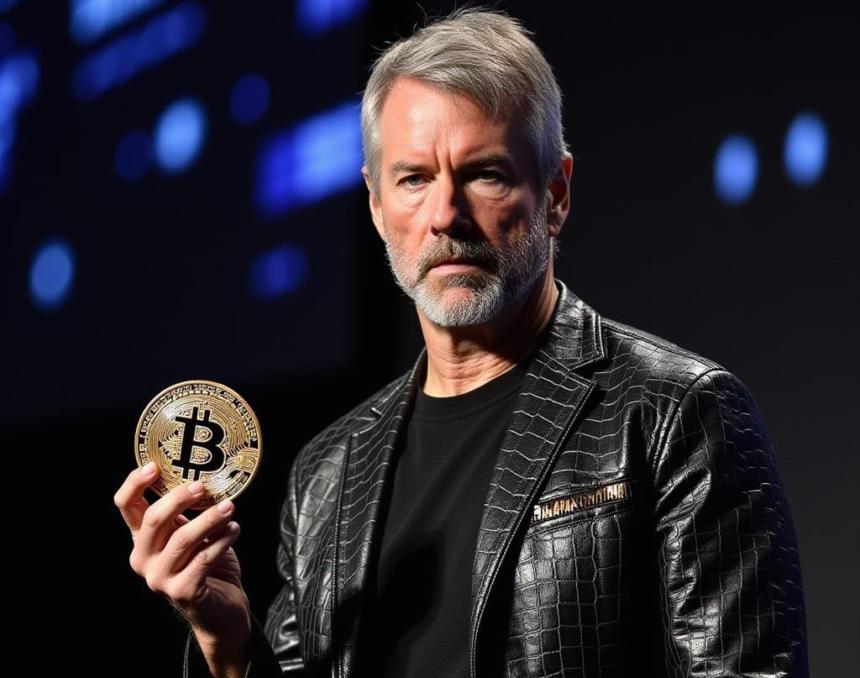
Michael Saylor’s cryptocurrency firm has made a significant move by purchasing an additional 24,869 bitcoins, amounting to over $2 billion at an average price of $80,985 per token. Year-to-date, the company has reported a Bitcoin yield of 12.6% and retains its title as the largest corporate holder of Bitcoin, boasting a treasury of 843,738 tokens. In total, the firm’s Bitcoin acquisitions have cost approximately $83.87 billion, with an average purchase price of $75,700 per coin. This latest round of Bitcoin purchases comes just months after Saylor publicly committed to quarterly BTC acquisitions.
Saylor has drawn a parallel between Bitcoin and Manhattan real estate, presenting the firm’s digital currency holdings as a modern equivalent of appreciating property assets that can serve as collateral for debt. He contends that debt-backed assets appreciating in value are essential for the growth of contemporary economies. During his recent appearance at Bitcoin 2026 in Las Vegas, Saylor outlined a long-term vision aimed at achieving a $1 trillion Bitcoin balance sheet. To finance these BTC purchases, the company has issued preferred shares, such as STRC and STRF, which convert projected Bitcoin growth into a perpetual capital base for further acquisitions.
However, this bold strategy has drawn criticism, particularly from Peter Schiff, an outspoken economist and Bitcoin skeptic. Schiff rebutted Saylor’s analogy between skyscrapers and Bitcoin, asserting that unlike real estate, which generates monthly rent, Bitcoin does not provide any yield unless sold. He has previously characterized the company’s STRC as a centralized Ponzi scheme and has recommended that the U.S. Securities and Exchange Commission investigate the firm for potentially misleading marketing practices.
The two viewpoints exemplify the ongoing debate about Bitcoin’s role as a store of value versus traditional assets that generate income. While Saylor is comfortable with the scarcity of Bitcoin and its credit potential, Schiff argues that the lack of cash flow is a significant drawback.
In another intriguing development, Saylor revealed plans to burn the private keys to his Bitcoin wallet upon his passing, thereby making his significant holdings permanently inaccessible. He believes this action serves as a pro-rata contribution to other Bitcoin holders, enhancing the scarcity of the digital currency. With a capped total supply of 21 million bitcoins, Saylor argues that each lost BTC increases the overall value of the remaining coins. His perspective suggests that reducing the circulating supply will ultimately lead to higher Bitcoin prices, especially as many coins are already considered lost due to technical failures or lack of succession planning among holders.
Saylor also emphasized the unique architecture of Bitcoin, which operates independently of intermediaries such as banks or governments. He argues that this decentralized network, reliant on mathematical consensus for transaction validation, offers a stark contrast to fiat currencies that are subject to counterparty risk. According to Saylor, dependence on traditional institutions can be problematic during economic downturns.
As discussions about Bitcoin’s future continue to evolve, Saylor’s legacy plans, coupled with his unwavering commitment to the asset, could signify a pivotal moment for the cryptocurrency market.