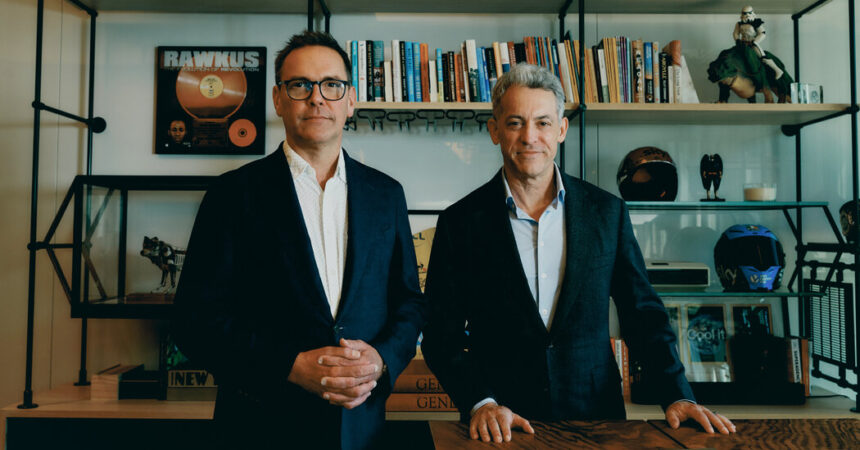
In a significant shift within the American media landscape, James Murdoch is poised to acquire approximately half of Vox Media. This move marks a notable expansion for Murdoch, the youngest son of media mogul Rupert Murdoch, and includes ownership of Vox Media’s podcast network as well as New York magazine, a publication that his father once owned.
In an interview, Murdoch clarified his intentions behind the acquisition, stating that he wanted to focus on “longer-form, thoughtful journalism that can really speak to the culture.” He expressed the desire to create platforms for talented individuals to produce their best work. This acquisition represents Murdoch’s largest deal since resolving a contentious battle over the control of his family’s media empire, which encompasses Fox News and News Corporation, the parent company of The Wall Street Journal.
Murdoch, who departed the News Corporation board in 2020 due to disagreements regarding the company’s direction and voiced concerns about climate change denial at some of its outlets, insisted that he is not attempting to diverge from his father’s legacy with this purchase. Instead, he emphasized his aim to build a successful business through Lupa Systems, the entity responsible for the acquisition.
The purchase of Vox Media serves as a reflection of the transformation underway in the digital publishing realm. Once held in high regard alongside other digital names like BuzzFeed and Vice Media—both of which have faced financial hurdles in recent years—Vox Media has evolved substantially since its estimated worth of $1 billion in 2015. The value of this current deal has not been publicly disclosed by Lupa Systems, but sources indicate it exceeds $300 million and is expected to finalize within weeks.
Under the agreement, Vox Media will function as a subsidiary of Lupa Systems, with plans for collaboration with other companies in Murdoch’s portfolio, which includes the Tribeca Film Festival and Bodhi Tree Systems, a supporter of a popular streaming service in India. Notably, Vox.com, an explanatory journalism platform founded in 2014 by Ezra Klein, Matt Yglesias, and Melissa Bell, is part of the acquisition, while other properties like The Verge and Eater will continue to operate independently.
Jim Bankoff, CEO of Vox Media, expressed enthusiasm for the collaboration, stating that he sought a long-term stewardship that prioritizes innovation alongside ethics in journalism. He remains at the helm of the portion of Vox Media not included in the deal, committed to navigating challenges in an evolving media landscape where traditional digital advertising revenues have recently faced setbacks.
Bankoff credited Vox Media’s resilience and adaptability in the wake of technological changes and declining search traffic—an issue exacerbated by advancements in artificial intelligence. He highlighted the effectiveness of their podcast strategy, which has proven financially rewarding, generating over $80 million in revenue for the company in recent years.
The synergy between Murdoch and Bankoff developed over time, particularly after an enticing offer for Vox Media’s podcast network sparked discussions between them. The negotiations gained momentum as Lupa Systems recognized the compatibility of New York magazine and the podcast network, prompting Murdoch to encourage a swift decision-making process regarding the sale.
Having been intricately involved in the evolving landscape of digital media, including his investment in Vice Media and the development of the Star streaming service in India, Murdoch aims to promote quality content that resists the mechanization prevalent in contemporary advertising. He believes that amidst an influx of superficial media, podcasts hold a unique authenticity that resonates with audiences.
In recent accolades, New York magazine received two National Magazine Awards, celebrating its excellence in journalism and photography, further establishing the significance of Murdoch’s investment in enhancing the media landscape.