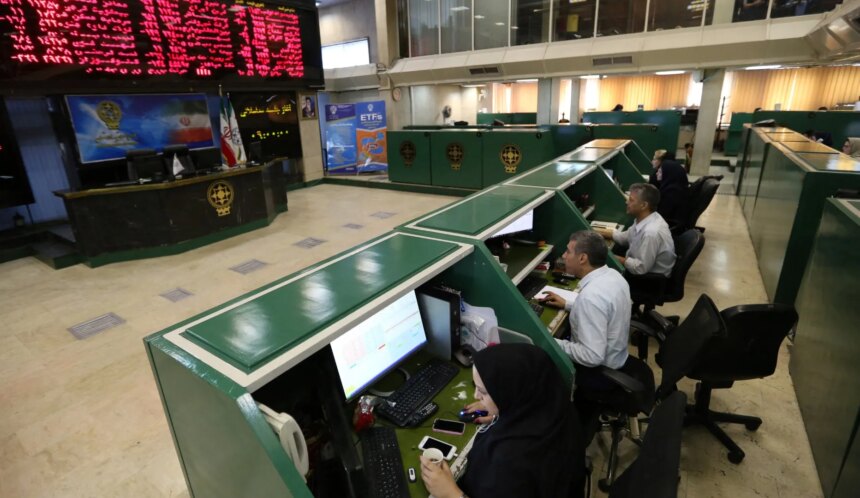
Tehran, Iran – After nearly three months of suspension, Iran’s stock market has recommenced operations under a controlled environment, albeit with significant restrictions. During the initial two days of this limited reopening, investors managed to create some liquidity; however, underlying economic challenges became apparent.
Reports indicated that more than a third of the market’s principal participants chose to abstain from trading, a decision motivated by the need to safeguard shareholders from potential ramifications stemming from the ongoing conflicts involving the United States and Israel. Specifically, 42 ticker symbols, representing roughly 36 percent of market activity, were inactive. Hamid Yari, deputy supervisor of the Securities and Exchange Organization, remarked that trading hours were extended by an hour on both reopening days to facilitate transactions.
Yari expressed hope for a definitive end to lengthy market closures, although he cautioned that potential new hostilities could necessitate further interventions. Notable absentees from trading included major petrochemical companies like Fajr and Mobin, as well as significant players in the steel and utility sectors. Many of these companies had substantial investments in infrastructure that has recently been targeted in the ongoing conflict. Additionally, equity funds with over 35 percent of their portfolios involved in these impacted companies will remain suspended indefinitely to alleviate additional selling pressures and bolster market stability.
Structural measures implemented prior to the global unrest limit price fluctuations to only 3 percent for the remaining two-thirds of market participants. Though Iran’s stock market is relatively underdeveloped due to U.S. sanctions and limited integration into global financial systems, it still serves as a critical barometer for investor sentiment and liquidity.
Encouraging signs emerged during the reopening sessions. Buy orders surpassed sell orders, and the equal-weight index, designed to offer a more equitable assessment of stock movements, showed a slight uptick. The main index of the Tehran Stock Exchange, TEDPIX, experienced modest gains, climbing to more than 3,758,000 points following an additional 44,000-point increase on Wednesday.
In recent years, the stock market has faced a downward trend, exacerbated by economic deterioration linked to nationwide protests and a subsequent suspension of activities. Economist Mehdi Haghbaali highlighted the difficulties faced by authorities in reopening the market, especially given that security concerns limit companies’ ability to fully disclose damages to their facilities and operations.
Smaller brokerage firms in particular are encountering significant challenges, as many traders had leveraged positions that were impacted by the market closure. Authorities have temporarily restricted brokers from compelling investors to inject cash or collateral or to liquidate shares that fall below necessary thresholds.
While Haghbaali noted that the reopening performed better than anticipated, he cautioned that this could reflect an already dire economic situation rather than a genuine recovery. High inflation, surpassing 70 percent as of late April, alongside a sharp decline in the value of the Iranian rial against the U.S. dollar, has rendered export-oriented companies more appealing as their revenues translate into higher domestic earnings.
However, caution remains essential, as traders may seek discounts to invest in riskier stocks. Ongoing trade disruptions, operational challenges for exporters, and escalating inflation complicate efforts to generate real value, which is expected to impact stock valuations.
In light of a substantial budget deficit, the government’s response options appear limited, providing only minimal assistance to families affected by sanctions while intensifying measures against hoarding and price inflation. Historically, Iran has addressed currency shortages by restricting imports of non-essential consumer goods, a strategy that may need to be revisited to reduce current inflationary pressures, despite the necessity for imports to rebuild infrastructure damaged by conflict.
Ultimately, Haghbaali suggested that a potential peace agreement between the U.S. and Iran could fundamentally alter the outlook, enhancing market expectations and providing crucial relief.