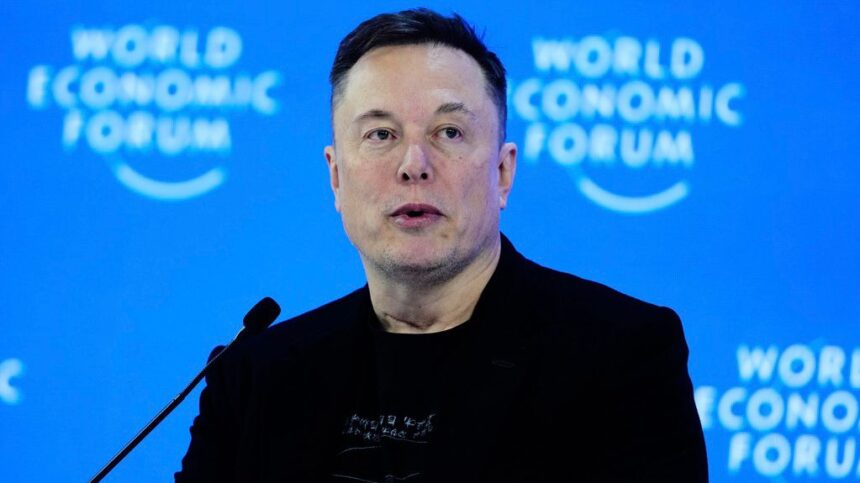
Elon Musk has unveiled ambitious plans for a significant public stock sale of SpaceX, despite the company enduring substantial financial losses. According to a recent filing, SpaceX incurred operational losses of $2.6 billion last year while generating $18.7 billion in revenue. The trend of losses has continued into the early months of this year, raising eyebrows among investors and analysts alike.
This forthcoming initial public offering (IPO) is expected to rank among the largest stock offerings ever, potentially eclipsing the record set by Saudi Aramco, which raised $26 billion during its IPO seven years ago. Although specific figures regarding the amount Musk aims to raise have not been publicly disclosed, estimates suggest that the offering could hover around $75 billion.
The capital raised through this IPO is earmarked for ambitious projects aimed at advancing space exploration, including plans to establish human settlements on the Moon and Mars. In the filing, SpaceX emphasizes the importance of creating a sustainable human presence beyond Earth, explicitly stating, “We do not want humans to have the same fate as dinosaurs.”
The prospectus reads in part like a vision for the future of humanity, indicating that Musk’s compensation will be tied to achieving benchmarks such as maintaining a “permanent human colony on Mars” consisting of at least one million inhabitants. Should this IPO succeed, it could also position Musk as the world’s first trillionaire, with Forbes estimating his current net worth at around $839 billion.
In addition to its rocket launch business, which has been buoyed by substantial government contracts from NASA and the Department of Defense, SpaceX generates revenue through its Starlink satellite communications service. This division has proven lucrative, reportedly contributing $4.4 billion in operating income last year. Starlink leverages a constellation of 10,000 satellites to provide internet service to approximately 10 million users across 150 countries and territories.
However, not all of Musk’s ventures have proven successful. Recent acquisitions, including the social media platform X (formerly Twitter) and the artificial intelligence firm xAI, have drawn criticism from some SpaceX investors as potential financial burdens. The AI venture alone reportedly lost $6.4 billion last year, raising questions about Musk’s strategy.
The prospectus also notes that a significant portion of SpaceX’s revenue derives from federal contracts, which amounted to $6 billion over the past five years, illustrating Musk’s intricate ties to government funding. This relationship has stirred concerns among ethics watchdogs, particularly regarding whether Musk has received preferential treatment due to his connections with the government.
Musk’s compensation structure further illustrates his influence within the company; his annual salary stands at $54,080—a figure unchanged since 2019. Beyond this salary, Musk’s earnings will be significantly tied to stock grants that are contingent upon reaching specific market capitalization milestones. For instance, for him to receive the full award, SpaceX’s market value would need to soar to $7.5 trillion.
The governance structure proposed in the prospectus grants Musk and certain other shareholders a unique class of stock with enhanced voting rights, ensuring they can exert significant control over corporate affairs. This structure warns prospective investors that their ability to influence company matters, including the election of the board of directors, may be limited.
As the company prepares for its roadshow—a marketing campaign to attract potential investors—SpaceX is setting the stage for a transformative chapter in its history, with plans to begin pitching the offering roughly 15 days after making its prospectus public.