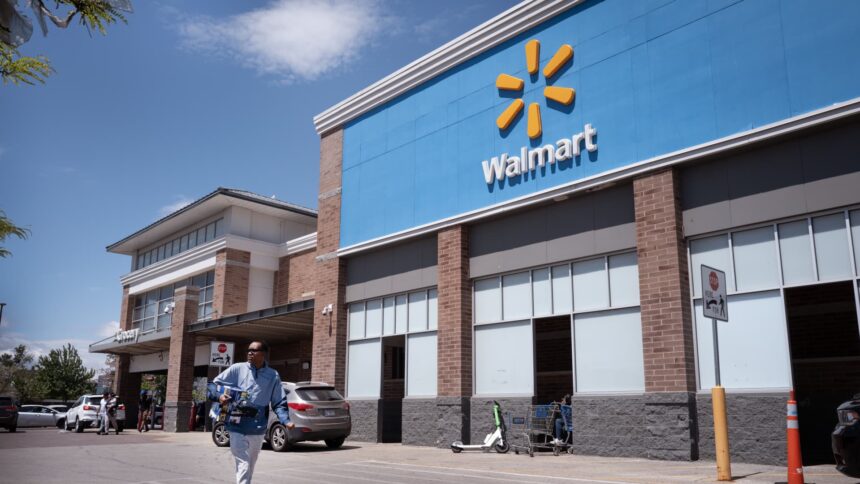
Customers shopping at a Walmart store in Chicago witnessed a surge in consumer focus as the retail giant prepared to release its fiscal first-quarter earnings report. Wall Street is keenly awaiting insights that could indicate the health of the U.S. consumer, especially in light of recent economic challenges.
Analysts anticipate that Walmart will report growth in both sales and profits, with consensus estimates predicting earnings per share of 66 cents and total revenue around $175 billion. This comes during a period marked by a variety of economic pressures, including escalating gas prices, a new regional conflict in the Middle East, and declining consumer sentiment, which has recently reached a record low.
The backdrop of sticky inflation, rising interest rates, and ongoing global trade tensions has further complicated the economic landscape. Despite these challenges, Walmart’s unique positioning allows it to serve a broad range of consumer segments, potentially revealing crucial insights into the economy’s overall strength. Historically known as a retailer for lower-income shoppers, Walmart has increasingly attracted higher-income consumers, a shift that has bolstered its growth and provided a buffer against recent economic shocks.
As it prepares to unveil its quarterly results, investors are eager to learn whether higher-income shoppers remain resilient amid rising gas prices and how lower-income consumers are coping with persistent inflation. Any signs of a reduction in spending could lead to a shift in purchasing behavior, with a greater emphasis on lower-margin groceries over higher-margin discretionary items. However, Walmart’s expansive revenue sources, including advertising and marketplace businesses, are expected to help mitigate such pressures and allow the retailer to maintain profitability.
The broader earnings season has shown that many major firms report stability in consumer spending, despite challenges. Notably, a recent earnings call from Target indicated that higher tax refunds have significantly contributed to consumer spending growth, prompting concerns that this boost may not be sustainable moving forward.
As Walmart prepares to share its insights, investors are keen to gauge if it has observed similar patterns in consumer behavior. This information could have significant implications for the remainder of the fiscal year and the broader economy as a whole.