Samsung Electronics has emerged as a key player in the current surge of global artificial intelligence, with rising demand for semiconductors significantly boosting the company’s market value to $1 trillion this year. This boom has also elevated Seoul’s stock market to the sixth-largest in the world. However, while the company thrives, its workforce is expressing dissatisfaction over compensation linked to soaring profits.
Tensions escalated as tens of thousands of Samsung employees threatened a strike, which would have been the largest in the company’s history, involving over 48,000 workers—nearly 40% of its South Korean workforce. The planned walkout came with the potential to disrupt vital memory chip production at a time when the AI industry is in dire need of these components.
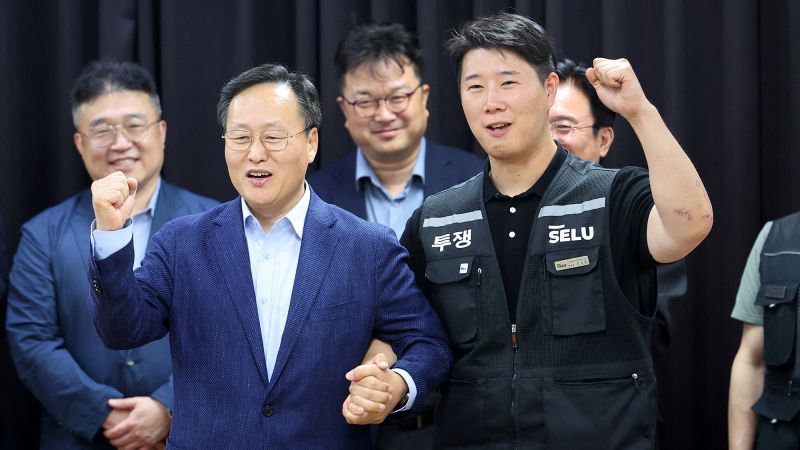
Just hours before the strike was set to commence, union representatives announced a tentative agreement with management. This preliminary arrangement, which awaits ratification by union members, marks a significant achievement for Samsung employees who have been advocating for increased wages in response to the company’s record earnings.
The potential strike raised alarms among both government officials and stakeholders in the tech industry. With Samsung’s revenue comprising over 12% of South Korea’s GDP last year, any pause in semiconductor production could have far-reaching implications. Prime Minister Kim Min-seok emphasized the national economic impact, stating that disruptions could lead to extensive damage beyond a single corporate entity.
The tentative agreement emerged amid a broader trend in the tech industry, where the rise of AI is prompting substantial layoffs and restructuring. For instance, Meta recently let go of around 15,000 employees, redirecting resources towards AI development. Other firms have followed suit, emphasizing a shift in job roles and responsibilities within the tech sector.
In a reflection of its financial health, Samsung reported record quarterly profits last month, with earnings more than eight times higher compared to the previous year. This swell in profitability has fueled employee demands for a greater share of the wealth.
The unions have put forth several key demands, including the abolition of the existing bonus cap at 50% of annual pay and the allocation of 15% of annual operating profits toward bonuses, requesting these changes to extend beyond the current year. While Samsung’s semiconductor developers are among the best-paid in the country, disparities in bonus structures compared to competitors like SK Hynix have become a focal point for unrest.
SK Hynix, South Korea’s second-largest chipmaker, has also posted record profits this year and recently modified its bonus system to allow for significantly higher payouts, thereby attracting attention from Samsung employees who feel they are being undervalued.
Under the terms of the newly reached agreement, Samsung has consented to eliminate the bonus cap and allocate 10.5% of semiconductor division profits to bonuses, reflecting a shift in corporate strategy in response to workforce pressures.
The labor dispute has opened up a nationwide dialogue regarding wealth distribution amidst the backdrop of rising corporate profits. Labor advocates have voiced concerns over the increasing divide between job security for workers at major corporations and those in less stable employment situations.
The semiconductor supply chain is under exceptional pressure, as major technology firms like Google and Amazon are urgently seeking advanced AI processors to support their data centers and development of next-generation AI technologies. Memory chips, once viewed primarily as low-margin commodities, have transformed into essential components for AI applications, significantly affecting global markets.
Currently, Samsung is positioned as one of the three leading memory chip manufacturers, alongside SK Hynix and Micron Technology. While Samsung initially lagged behind in capitalizing on the AI boom, the company has rebounded, driven by relentless demand for memory chips.
As the tentative agreement delivers a temporary boost to Samsung’s stock, the possibility of a strike remains if union members reject the proposal. Analysts have cautioned that any disruption from a major supplier could exacerbate existing shortages within the AI space, potentially leading to further price increases in the coming months.
While a complete halt to production is not anticipated, legal decisions have mandated that certain safety operations for chip manufacturing must maintain normal staffing levels, somewhat alleviating fears of total disruption.