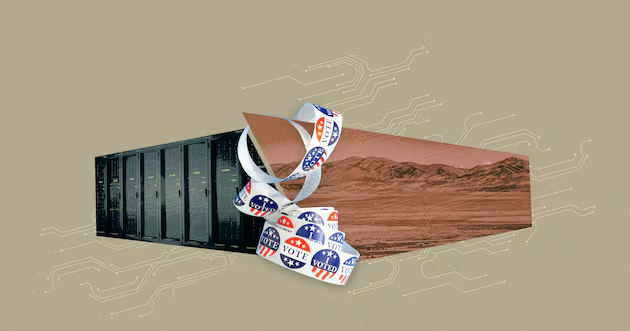
A recent Deseret News-Hinckley Institute of Politics poll has revealed that 53% of Utah voters oppose the proposed Stratos Project, a massive data center initiative in Box Elder County backed by celebrity entrepreneur Kevin O’Leary. The survey, conducted by Morning Consult, highlighted significant public concern regarding the potential environmental impacts stemming from the data center’s operations, with nearly 70% of respondents believing the economic advantages do not outweigh the detrimental effects on water and energy resources.
The Stratos Project, which aims to establish a substantial data center spanning 40,000 acres across three sites in Hansel Valley, has quickly spurred a heated debate among state leaders, candidates, and voters alike. The project promises substantial economic benefits, including projected investments of $100 million, the generation of around 2,000 jobs, and the payment of $30 million in energy tax revenue for its initial phase. However, skeptics remain focused on its environmental footprint—at full capacity, the center is expected to consume more than 7.5 gigawatts of energy and 619 million gallons of water annually, leading many to question its sustainability.
Poll director Jason Perry noted the swift formation of public opinion regarding the project, which has now become a significant topic in local politics. He highlighted the unusual rate at which Utahns have expressed their views on this complex issue, especially among self-identified Democrats and suburban voters—85% of Democrats oppose the project, contrasting with 36% of Republicans, with a notable 45% of GOP voters supporting it.
Key regional variances were also evident among the voting population: while 52% of urban residents support the data center, opposition surged in suburban areas, where 61% expressed disapproval, and among rural voters, where the figure stood at 53%. The poll results mirror a growing national alarm regarding large data centers, with 69 jurisdictions across the U.S. implementing moratoriums on similar projects.
O’Leary’s initial discussions with Utah Governor Spencer Cox and the subsequent approvals by the Box Elder County Commission have further intensified scrutiny over the process. Critics argue that the government’s expedited support lacks proper transparency and has incited a wave of skepticism among constituents. Many residents have voiced fears about the potential overreach of private interest in public resource management.
The poll also queried voters on whether they believed the accompanying job creation and tax benefits justified the environmental costs. Across all demographics, nearly 70% rejected the notion that the benefits outweighed the harms to water and energy resources, including 82% of Democrats and 60% of Republicans. Former AI policy analyst Brady Young emphasized the importance of public transparency and trust, suggesting that quick endorsement of such projects by wealthy individuals could result in public apprehension.
In light of the widespread concern, candidates across the political spectrum are reshaping their campaign narratives. Governor Cox has acknowledged the need for a thorough discourse on the implications of the project, while GOP representatives have varied in their responses—some support the project, while others call for increased transparency and caution.
As the controversy unfolds, it’s anticipated that the debate over AI data centers will remain a focal point in Utah politics. Experts predict that this tension will become a common political issue across the country as technological infrastructure evolves, leading to a diverse coalition of groups united by their apprehension toward the rapid advancements in AI and data management. This aligns with broader national trends as communities and policymakers grapple with the implications of similar developments nationwide, paving a complex path forward for such initiatives amidst the landscape of community priorities and environmental stewardship.