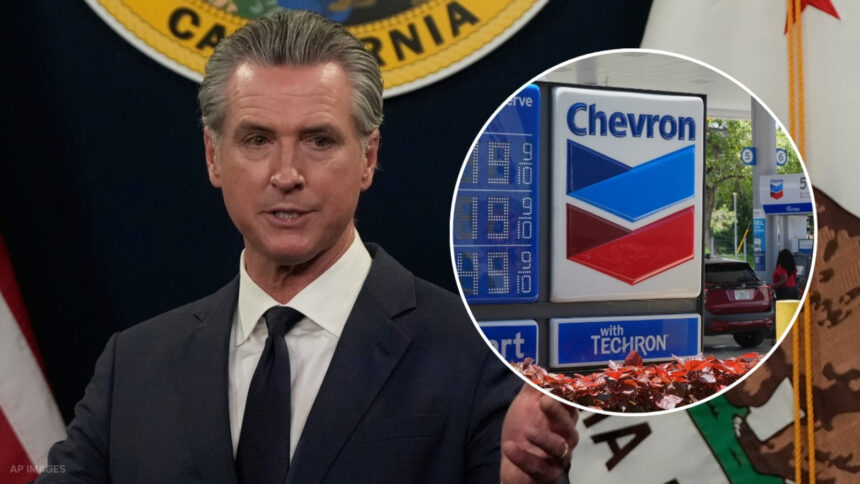
California Governor Gavin Newsom has publicly clashed with Chevron over the escalating gas prices in the state. As Memorial Day weekend approaches, his office has encouraged residents to avoid filling up at Chevron stations, suggesting that consumers consider unbranded gas, which is interchangeable with Chevron’s fuel but typically costs less.
The governor’s office highlighted an analysis from a division within the state’s energy commission that revealed Chevron’s gas prices averaged between 60 to 80 cents per gallon more than unbranded alternatives. In a post shared on X, Newsom’s office attempted to inform the public about the cost discrepancies, indicating, “Big Oil is already making billions off Trump’s Iran War; don’t let them rip you off even more by overpaying for the brand name.”
California’s average gas price stands at $6.14 per gallon, significantly exceeding the national average by about $1.58. State officials attribute a portion of this price to California’s high fuel tax of approximately 70 cents per gallon, the highest in the nation.
In response to rising prices, Chevron has positioned itself defensively by placing signs at its gas stations across California. These signs argue that state climate policies are driving up fuel costs. “California politicians are choosing foreign oil and fuels over local jobs and lower costs,” one sign contends. Customers are directed to a QR code that leads to a webpage where they can advocate for more affordable energy options.
Chevron spokesman Ross Allen stated that these signs are part of a broader initiative launched three years ago aimed at educating consumers about the price impacts of state policies. He emphasized that many Chevron stations are independently operated, allowing for varied pricing structures despite the brand’s overarching control.
This issue has also seeped into the political arena, with environmental activist Tom Steyer criticizing fellow Democrat and former federal health secretary Xavier Becerra for accepting campaign contributions from Chevron.
The ongoing gas price increase has been exacerbated by the current geopolitical climate, particularly the ongoing conflict surrounding Iran, which has contributed to a global energy crisis and disrupted oil supply routes, notably in the Strait of Hormuz, a critical passage for crude oil transport.
Despite Newsom’s commitment to tackling oil company profits and lowering gas prices, recent attempts to penalize these companies for excessive profits have been delayed. Although he signed a law allowing the energy commission to impose fines, regulatory actions have been postponed until 2030.
In 2024, Newsom further empowered the commission with the authority to require refineries to maintain inventory levels to prevent sudden price hikes during maintenance shutdowns. However, these regulatory efforts have also faced bureaucratic delays, complicating the state’s endeavor to stabilize fuel prices while addressing the climate crisis.