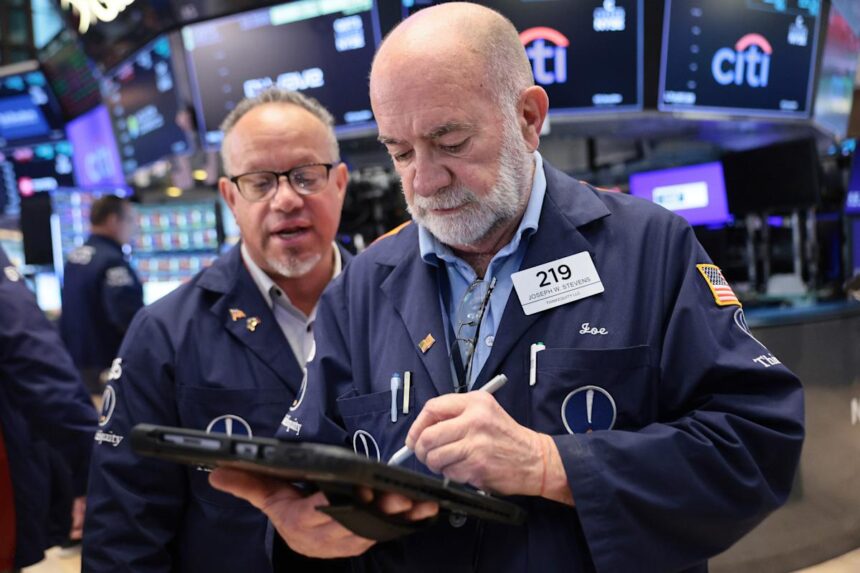
US stock futures showed cautious gains as anticipation built around the latest updates on US-Iran peace negotiations. Futures linked to the Dow Jones Industrial Average and the S&P 500 climbed 0.3%, while those connected to the tech-heavy Nasdaq 100 saw a slightly higher rise of 0.5%.
This uptick follows a rebound in stocks observed on Thursday, bolstered by signals from Secretary of State Marco Rubio and Iranian media indicating progress in the negotiations between the US and Iran. Earlier in the week, markets faced downward pressure amid concerns regarding persistent inflation, raising fears of potential interest rate hikes by the Federal Reserve. However, the renewed optimism from reports of advancements in US-Iran talks starting Wednesday has given investors hope for a resolution to one of the factors contributing to rising prices.
On Friday, economic focus will shift to the University of Michigan’s latest consumer sentiment readings and inflation expectations, which are expected to provide further insights into the ongoing price pressures exacerbated by the protracted conflict. The earnings season is also nearing its conclusion, with notable government contractor Booz Allen Hamilton set to release its results before market opening.
In related news, oil prices experienced an upward trend following three consecutive days of declines. According to Bloomberg, the price of Brent crude approached $105 a barrel, although it remained down over 4% for the week. West Texas Intermediate was close to $98 per barrel. Iranian statements regarding uranium negotiations and the strategic Strait of Hormuz have tempered earlier optimism regarding the peace talks with the US.
Iran’s latest comments suggested some bridging of gaps in the discussions, particularly with respect to the US proposal. However, remarks from the Supreme Leader of Iran concerning the country’s uranium stockpile and ongoing disputes over shipping regulations in the Strait of Hormuz have complicated the outlook for a meaningful breakthrough. The mixed messaging surrounding these crucial issues leaves uncertainty about whether the two nations are making substantial progress towards a deal, particularly in light of renewed threats of escalation in recent days.
This ambiguity has led oil traders to remain on high alert as they attempt to predict when energy flows through the Strait of Hormuz, a vital global shipping route, will return to normal. The ongoing conflict and subsequent supply restrictions have resulted in record drawdowns of global crude oil stockpiles, according to analyses from Goldman Sachs Group Inc.