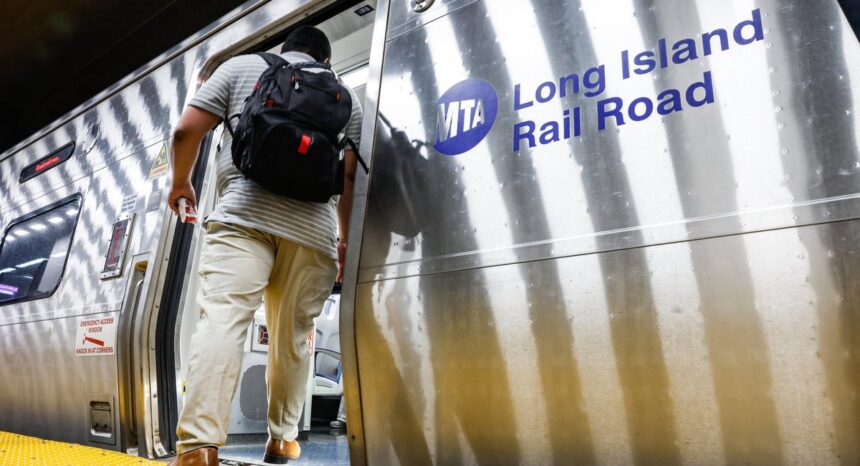
The recent three-day strike by Long Island Rail Road (LIRR) workers concluded with a settlement that grants employees a significant wage increase, although it did not include the work rule reforms that the Metropolitan Transportation Authority (MTA) had aimed for. MTA Chair Janno Lieber had sought changes to longstanding work rules—which date back to the LIRR’s days as a privately owned entity—such as a double pay provision for locomotive engineers who operate both diesel and electric trains during the same shifts.
While the specific details of the settlement remain undisclosed, it is known that the contracts require ratification by rank-and-file members of the five unions involved, along with approval from the MTA board. Lieber acknowledged that he did not achieve the desired reforms but highlighted the importance of raising public awareness about outdated rules still in place. He remarked during a press conference that such rules are “antiquated and somewhat abusive,” suggesting that the public spotlight will be beneficial in addressing these issues.
The strike arose from disagreements over pay raises for the final year of a four-year agreement. A Presidential Emergency Board had previously recommended a 4.5% raise for this period, alongside a $3,000 lump-sum payout. The unions initially requested a 5% raise, which MTA officials argued could necessitate an 8% fare increase and potential job cuts. Ultimately, the MTA agreed to the 4.5% raise, albeit distributed over 14.5 months rather than the standard 12, and also approved the $3,000 bonus. The parties also agreed to transition to a modern electronic payroll system, which is expected to yield cost savings.
Michael Sullivan, the general chair of the Brotherhood of Railroad Signalmen, one of the participating unions, expressed satisfaction with the deal, describing it as a “clean deal” but noting the importance of the ratification process. He also indicated an openness to discussing additional items within the next 30 days.
Following the settlement, Lieber stated that there would be no need for fare increases beyond the scheduled 4% every two years. The MTA’s budget had earmarked funds for a 2% annual pay increase for its workers, but Lieber confirmed that there is flexibility in the budget to support the agreed-upon larger wage increases without imposing additional fare hikes on riders. He reassured the public that the regular fare increase would not exceed the established biannual rate.
Rachael Fauss, a senior policy adviser with the advocacy group Reinvent Albany, commented on the budgeting strategies employed by the MTA. She noted that the agency appropriately included a conservative 2% annual raise in its budget documents to avoid negotiating against itself. However, she acknowledged that budgets can often reflect political considerations and that conservative estimates might help manage unforeseen financial challenges.
As the MTA concludes this contentious agreement, it prepares to enter negotiations with the Transport Workers Union Local 100, representing 38,000 subway and bus workers, who are expected to seek similar terms to those reached by the LIRR unions.