In recent graduation ceremonies, a notable trend has emerged where speakers addressing fresh graduates have faced significant backlash, particularly when discussing artificial intelligence (AI). Many young people perceive AI as a source of adversity, leading to contentious responses from audiences, even at celebratory events meant to inspire.
One such incident occurred at the University of Central Florida, where real estate executive Gloria Caulfield was met with boos after discussing her views on AI. This backlash was echoed at another graduation ceremony featuring former Google CEO Eric Schmidt, underscoring a growing unease surrounding the impact of AI on future job prospects.
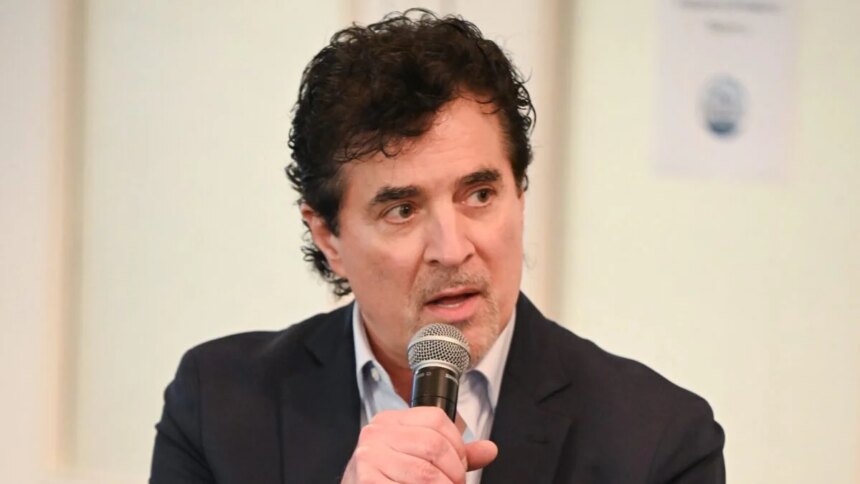
Adding to this narrative was a speech by Scott Borchetta, a record executive with a net worth of $450 million who co-founded the Big Machine Label Group. Borchetta recently delivered a commencement address at Middle Tennessee State University, coinciding with his donation of $15 million to name the media college after him. His remarks stirred controversy as he framed AI as a challenge and an opportunity, asserting that graduates must adapt to the rapidly evolving landscape shaped by AI technologies.
While acknowledging the excitement of the current media environment, Borchetta emphasized that AI presents significant hurdles. He recounted his own experiences with the transition to streaming music, portraying himself as a proactive figure who adapted to the changing industry. His suggestion to graduates was clear: like he did with streaming, they should leverage AI to secure their positions in a competitive economy. However, his message quickly drew mixed reactions, leading to murmurs of discontent from the audience.
The critical turning point in Borchetta’s speech occurred when he compared his journey through the challenges of the music industry with the landscape presented by AI. As the audience began to realize that he was encouraging them to confront AI in the same aggressive manner he had faced streaming, discontent erupted into audible protests.
Borchetta’s reaction to the negativity was notable, as he attempted to maintain his composure and press on with his rhetoric. His statements about AI being a tool and the metaphor of a genie “not going back in the bottle” struck a nerve, as he suggested that graduates must either engage with these changes or face the consequences later. His challenge to “do something about it” resonated as both an encouragement and a warning, emphasizing the stark reality that the economic landscape favors those who are willing to take risks.
This sentiment was reiterated in a report from the New York Federal Reserve, which revealed that many CEOs are increasingly favoring older workers and deploying AI in their companies, leading to concerns about shrinking opportunities for new entrants into the job market.
The overarching message delivered by Borchetta and his contemporaries has raised important questions about the role of commencement speakers and their responsibilities to upcoming graduates. Graduates left wondering whether this kind of harsh honesty and competitive framing serves to motivate or demoralize, questioning who truly benefits from such a narrative in an already challenging economic environment. As each graduating class prepares to enter the workforce, they are not only facing the complexities of their chosen fields but are also navigating an evolving landscape increasingly dominated by AI technologies.