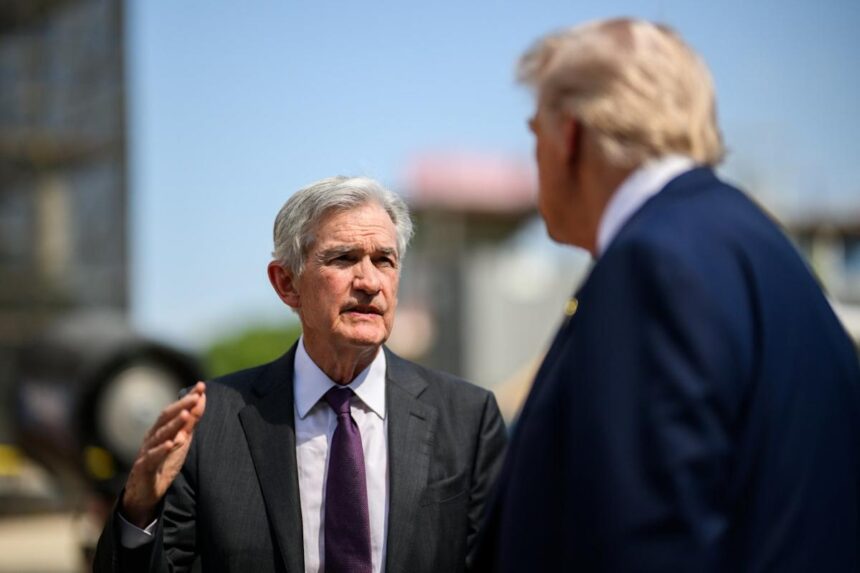
This year has witnessed significant developments in the financial world, highlighted by unprecedented rallies in major stock indices, such as the Dow Jones Industrial Average, S&P 500, and Nasdaq Composite, reaching all-time highs. Furthermore, May 15 marked a pivotal transition in leadership at the Federal Reserve, with Jerome Powell concluding his second term as Fed Chair to make way for President Donald Trump’s nominee, Kevin Warsh. Warsh’s appointment makes him the 17th head of the Federal Reserve since its inception in 1913.
Analysts are now contemplating the potential implications of Warsh’s leadership, particularly concerning his relationship with Trump. As Trump’s selected successor, there are indications that their rapport may differ from the contentious dynamic that characterized Powell’s tenure. However, both Warsh and Trump are aligned in their criticism of the Fed’s previous monetary policies, suggesting a possibility of renewed tensions.
Throughout his recent term, Powell publicly navigated a fraught relationship with Trump, who expressed dissatisfaction over the Fed’s cautious approach to interest rate adjustments. Trump has been vocal in advocating for more aggressive rate cuts, even suggesting that rates should drop to 1% or lower, a stark contrast to the current range of 3.5% to 3.75%. The Federal Open Market Committee (FOMC) has already cut rates multiple times, but Trump continues to pressure for a more proactive stance to stimulate economic growth and make debt servicing less burdensome.
Despite the president’s persistent calls, Powell maintained that economic data, rather than political pressures, should dictate monetary policy. He frequently pointed to external factors, such as Trump’s tariffs and geopolitical tensions, as contributing to persistent inflation, which ultimately led to a pause in rate cuts.
With Warsh stepping into the role, market observers anticipate a shift back towards a more hawkish monetary stance. Warsh’s history on the FOMC demonstrates a reluctance to endorse lower interest rates, even during times of economic downturn. As inflation rates climb—conditioned in part by disruptions in global oil supplies—Warsh’s approach may lean towards tightening monetary policy rather than easing it.
The backdrop of rising inflation could exacerbate tensions between the new Fed chair and Trump. Recent figures indicate that inflation has surged from 2.4% to 3.8% over several months, with projections indicating it could reach 4.18%. Warsh has indicated a desire to reduce the central bank’s vast balance sheet accumulated over the past decade, a restructuring that could lead to higher borrowing costs as bond prices fall.
These developments promise to create a complex environment for the stock market, which may bear the consequences of any renewed disputes. Investors are left considering whether to maintain their positions in major indices like the S&P 500 or look toward alternative investment opportunities.
Amid this shifting landscape, analysts are urging caution and advising investors to explore other stocks with potentially higher returns. Research has highlighted a set of ten stocks considered primed for significant growth, showcasing the unpredictable and volatile nature of current market conditions. As the financial community awaits the unfolding of the Trump-Warsh relationship, the direction of policy and its impact on the economy remains uncertain.