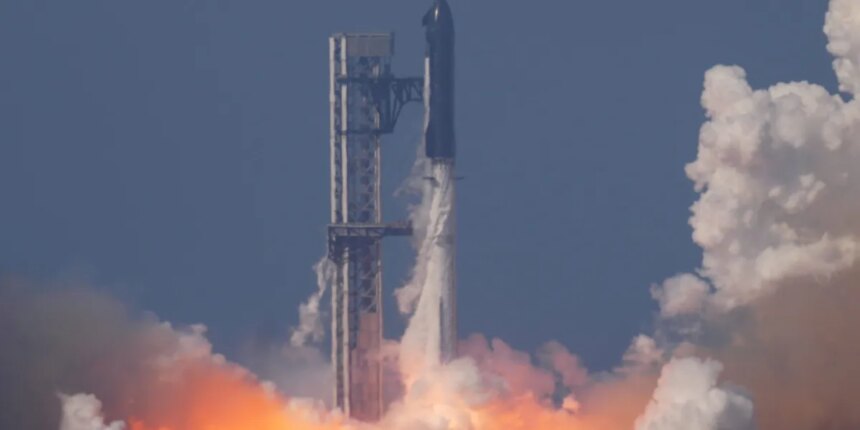
Elon Musk’s SpaceX is positioning itself for a ground-breaking initial public offering (IPO), potentially the largest in history, largely fueled by the advancements in its next-generation Starship vehicle. The Starship V3 stands at an impressive 408 feet, surpassing previous iterations not only in height but also in capacity, being able to transport up to 100 metric tons—an increase from the 35 metric tons accommodated by its predecessor, the V2.
Central to its enhanced capabilities are the 33 new Raptor 3 engines, capable of generating 18 million pounds of thrust at liftoff. Yet, beyond the technical specifications, the Starship V3 is envisioned as a pivotal element in the array of businesses underpinning SpaceX’s staggering $1.7 trillion valuation. Chad Anderson, founder of VC firm Space Capital and an early investor in SpaceX, highlighted the vehicle’s crucial role in supporting various ventures, including Starlink’s satellite internet service, its mobile phone initiatives, and the establishment of orbital data centers.
Anderson elaborated on the broader implications of Starship, suggesting a significant convergence between ground-based and orbital infrastructure, creating new opportunities to shift heavy industries beyond Earth’s atmosphere. The vehicle is also expected to be instrumental in the ambitious plans for constructing a lunar base and, eventually, a colony on Mars. Notably, documents associated with SpaceX’s IPO indicate that Musk would receive additional shares contingent upon the establishment of orbital data centers and the successful implementation of a Martian colony.
The operational capabilities of Starship V3, currently undergoing test flights, allow SpaceX to launch a greater number of next-generation satellites than was feasible with the partially reusable Falcon 9. This is particularly relevant as SpaceX aims to deploy 42,000 satellites in low Earth orbit, a massive increase from the current 10,000, facilitating connectivity for “hundreds of millions” of users via its satellite network.
While these advancements are promising, questions about how SpaceX can substantiate its remarkable valuation remain. The company’s IPO prospectus projects a “total addressable market” of up to $28.5 trillion, just shy of the U.S. annual GDP. Yet, experts note that the prospectus raises several questions, particularly regarding valuation multiples and the unique influence of Musk.
Aleksandar Tomic, an economist and associate dean at Boston College, remarked that the future value of SpaceX is difficult to ascertain, especially given Musk’s reticence to provide specific insights. However, Anderson maintains that SpaceX’s worth cannot be compared to typical corporations. He emphasized that investors are likely considering much longer-term projections, looking beyond the immediate launch business to the broader strategic advantages offered by access to orbital space.
Ultimately, as SpaceX prepares for its monumental IPO, the focus shifts not only to the technological marvel that is the Starship V3 but also to the visionary applications it promises in transforming industries and potentially extending human presence beyond Earth.