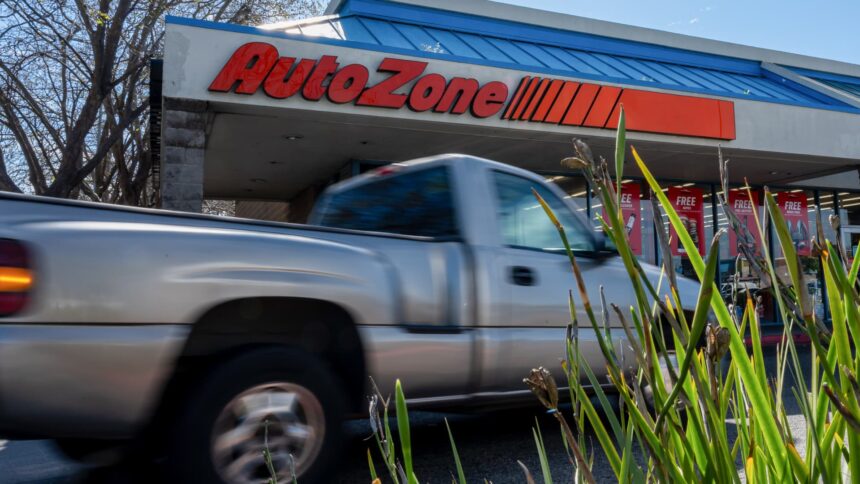
An AutoZone store in Richmond, California, experienced a significant downturn on Tuesday, as AutoZone Inc. faced its steepest stock decline in over four years, despite surpassing Wall Street’s third-quarter fiscal estimates. The retailer’s shares plummeted 9% by the close of trading, marking the sharpest drop since a 9.5% decline observed on May 18, 2022.
During after-hours trading, AutoZone’s stock continued to slide. The company reported earnings per share of $38.07 for the latest fiscal quarter, exceeding the expected $36.28 per share based on average estimates from LSEG. Revenue came in at $4.84 billion, closely aligning with LSEG’s forecast of $4.83 billion. The fiscal quarter concluded on May 9.
On a quarterly earnings call, analysts expressed concerns regarding sluggish international growth and margin pressures that have more closely mirrored competitors. Further scrutiny was directed toward a decline in year-over-year sales, which the company attributed to unseasonably cool weather impacting typical seasonal demand in heat-related product categories.
“This slowdown in sales was caused by unseasonably cool weather impacting our heat-related categories, which normally begin to ramp this time of year as summer heat begins to take hold,” stated AutoZone CEO Philip Daniele during the call.
Additionally, Wall Street analysts probed the company’s executives about ongoing pressures from rising inflation, energy costs, and potential supply chain disruptions, particularly those stemming from the war in Iran, which could affect the availability of motor oil. AutoZone management acknowledged the persistence of inflationary pressures but indicated that they might be “slightly muted” due to year-over-year comparisons. They also conveyed a degree of confidence regarding supply issues with lubricants, such as motor oil, which have raised concerns for automotive manufacturers.
“Regarding the issue around lubricants, I know there’s a lot of noise out there. We’re going to leave that up to the oil specialists to really say what that means. We think there are probably going to be some constraints, but we don’t think that it’s going to be that material,” Daniele explained.
Reports have emerged indicating that both Nissan and Toyota have begun to notify dealers about rationing motor oil stocks due to anticipated shortages. A spokesperson for Toyota stated that the company has no further comment on the situation at this time. Meanwhile, Nissan confirmed that it is managing supplier constraints affecting lubricant availability and is currently implementing temporary allocation measures to maintain consistent supply across its dealer network.
“Our priority remains supporting our dealers to ensure an exceptional customer experience,” the Nissan spokeswoman noted in an emailed statement, while also indicating that they are collaborating with supplier partners to explore additional sourcing options.