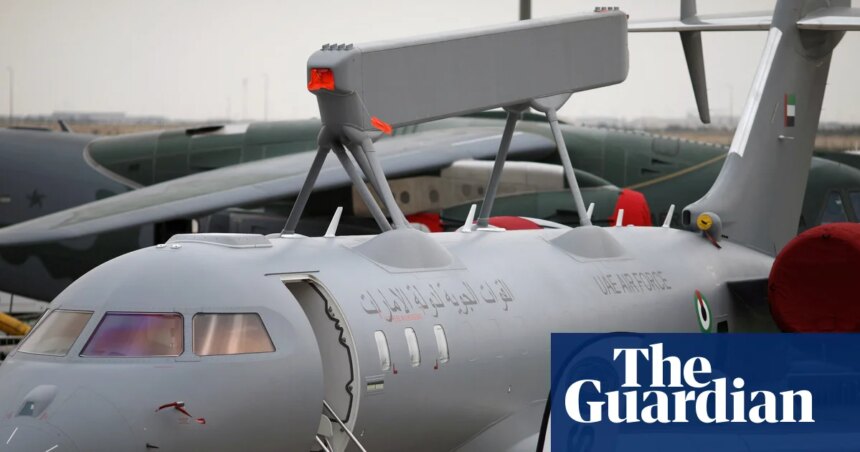
In a significant shift in defense procurement strategy, Canada has announced plans to acquire a fleet of early warning aircraft from Sweden’s Saab, specifically opting for the GlobalEye model over Boeing’s E-7 Wedgetail. This decision, articulated by Prime Minister Mark Carney during a defense conference in Ottawa, aligns with Canada’s intent to enhance its military autonomy and reduce reliance on US defense contractors.
The GlobalEye aircraft, which is derived from Bombardier’s Global 6500 jet platform, is equipped with advanced sensors and mission systems that will bolster the Canadian Armed Forces’ ability to detect and deter potential threats, particularly in the Arctic region. Carney highlighted the aircraft’s capabilities as crucial for safeguarding Canada’s extensive Arctic territory, which spans over 4.4 million square kilometers—larger than India.
This procurement move marks a pivotal change for Canada, which has historically relied on US military partnerships for monitoring its vast land and maritime areas. Carney pledged in March to take full responsibility for the defense of the Arctic, emphasizing the importance of self-sufficient national security strategies.
While specific details concerning the fleet size and total contract costs were not disclosed during the announcement, military officials indicated that Canada is considering the acquisition of six early warning aircraft. Saab, in response to the upcoming deal, has committed to investing in research and development efforts within Canada, potentially enhancing local job creation and economic ties.
Experts have noted that this decision represents a critical test of the Carney administration’s broader defense policy, aimed at pivoting away from exclusive reliance on American military capabilities. Philippe Lagasse, an associate director of international affairs at Carleton University, remarked on the implications for Canada’s relationship with Sweden, a newly recognized NATO ally eager to deepen military cooperation with Canada.
Additionally, Canada has expressed a desire to collaborate more closely with Nordic countries on defense issues, particularly in the Arctic, amidst a landscape where US commitment is perceived to be less reliable. Swedish Prime Minister Ulf Kristersson highlighted the positive economic impact of the GlobalEye program, noting its potential to create jobs and strengthen the supply chain in Canada.
Saab is also being considered for the provision of Gripen fighters as part of Canada’s expanding military modernization efforts. Although Canada has contracted to purchase 88 F-35 jets from Lockheed Martin, the recent imposition of US tariffs on essential Canadian imports led Carney to explore alternatives. This indicates a flexible approach to defense procurement that may include diversifying sources of military equipment.
As Canada moves forward with its defense strategy, the decision to procure from Saab exemplifies a commitment to enhancing national security while fostering international partnerships—particularly with allies outside of the United States.