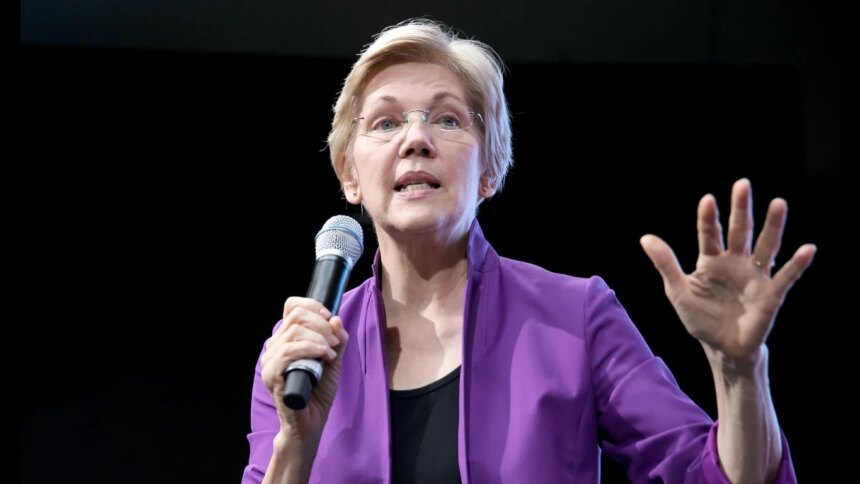
For months, Ripple’s national bank charter has been viewed as a pivotal breakthrough for its position within the regulated financial ecosystem. Designed to validate Ripple’s transformation from a simple payments company to a serious player in the banking world, the charter was celebrated by proponents who believed it would secure a path for XRP into mainstream finance. However, this narrative faced significant upheaval when U.S. Senator Elizabeth Warren emerged as a prominent critic.
In a letter addressed to the Office of the Comptroller of the Currency (OCC) on May 18, Warren raised questions regarding the legitimacy of national trust charters approved for nine cryptocurrency firms, including Ripple. Her contention centers on the assertion that these companies are not merely service providers but are acting as “crypto banks” seeking to bypass crucial regulatory safeguards and obligations that traditional banks must follow. This broad critique spans leading firms such as Coinbase and Circle, placing Ripple in a wider context of scrutiny rather than isolating it for particular examination.
Warren has demanded that the OCC provide documentation concerning the charter applications, the rationale behind the approvals, and any communications related to the decision-making process, particularly those involving the Trump family. This last point infers possible political favoritism, suggesting that the expedited approvals could be linked to connections with the former administration.
Despite the weight of Warren’s allegations, it is important to distinguish her demands for answers from any authoritative action that could influence Ripple’s charter. As it stands, Ripple is still positioned to operate under the charter, while the agency considers her inquiries.
Warren’s critique hinges on the National Bank Act’s definition of trust companies, which are meant to perform limited functions primarily centered around asset management. She argues that these cryptocurrency firms have sought trust charters while pursuing business strategies that resemble those of full banks, which include facilitating payments, offering loans, and even issuing stablecoins—activities typically restricted to banks.
This poses a significant legal dilemma regarding what constitutes a trust company versus a bank, especially in the context of cryptocurrency custody and stablecoins, an area where regulatory clarity remains murky.
In response, the crypto industry is rallying to defend these charters. The Digital Chamber, a major trade group, has asserted that Congress has already provided a framework for stablecoin regulation with the GENIUS Act, rendering Warren’s criticisms moot. They argue that OCC charters are consistent with the law, emphasizing that these firms do not accept FDIC-insured deposits, and thus should not be held to the full spectrum of banking regulations.
On the other hand, traditional banking lobbyists align with Warren’s viewpoints, expressing concern over cryptocurrency firms gaining banking privileges through means they consider circumvention of established norms.
As of now, the OCC maintains that granting these charters falls well within its authority, leading to a standoff. The upcoming June 1 deadline is crucial, as it will prompt the OCC’s response, either reinforcing its stance or potentially escalating legal challenges.
While Warren’s challenges add pressure to Ripple’s ambitions, they have not nullified the charter itself. The implications of this political situation are complex. Even if Ripple successfully navigates these challenges, the anticipated benefits for XRP or its stablecoin RLUSD depend on how the charter enhances functionality and integration into the banking infrastructure.
Ultimately, the conflict highlights the uncertain future for Ripple as a bank and the broader implications for cryptocurrency’s place in regulated finance, while the fate of XRP rests separately within this evolving landscape.