Republican lawmakers are witnessing a substantial shift in their investment strategies, reflecting areas championed by former President Donald Trump, notably in tech stocks like Intel and the cryptocurrency Bitcoin. This trend marks a notable evolution in the investment landscape among GOP members of Congress, historically distinguished from their Democratic counterparts whose portfolios have leaned heavily towards technology.
Traditionally, Democratic lawmakers focused on sectors dominated by technology, while Republican investments tended to favor more conventional industries. However, a recently established exchange-traded fund (ETF) designed to imitate the collective portfolio of Republican lawmakers reveals a significant pivot. Once filled with blue-chip companies, the fund now prominently features top holdings such as Intel, Nvidia, and the iShares Bitcoin Trust ETF.
This increased GOP interest in tech aligns closely with Trump’s own considerable trading activity in the sector, especially following the U.S. government’s acquisition of a 10% stake in Intel last year. Recent reports indicate that Trump’s trading in high-profile stocks has surged, with over $50 million exchanged in a select group of “Magnificent 7” stocks during the first quarter of 2026, including Intel, while he actively endorses the heads of these firms.
In contrast, Democrats seem to maintain a steadier investment approach, with Nvidia making up nearly 10% of their holdings, reflecting continuity rather than dramatic change. When examining the performance of the ETFs representing lawmakers from both parties, the results have been positive this year, with Republicans achieving a remarkable gain of over 20%, largely propelled by Intel’s more than 220% increase. Meanwhile, the Democratic ETF has registered a modest rise of about 9%.
Quiver Quantitative, a firm specializing in tracking lawmaker trades, indicates that 24 individual lawmakers, split evenly between both parties, have secured returns exceeding 20% in 2026, showcasing a competitive landscape in Capitol Hill investments.
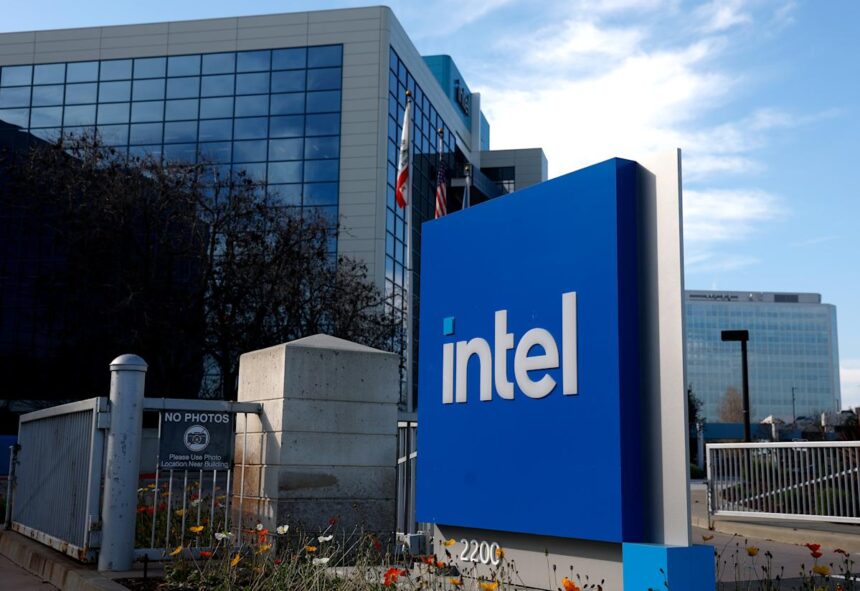
A noticeable driver behind the GOP’s shifting portfolios is the robust trading activity centered around Intel. The semiconductor company’s holdings within Republican portfolios have surged to 7.72%, up from a mere 3% just months prior, highlighting a dramatic turnaround as Intel previously failed to break into such a prominent position in GOP investments.
Politicians have initiated transactions in Intel stock nearly 50 times since Trump assumed office, with activities valued between $525,000 and $1.8 million. Some trades have raised questions, particularly a series executed by Rep. Tim Moore prior to the public announcement of the government’s Intel investment. While Moore’s spokesperson maintains he divested before the news broke, such moves reflect the contentious nature of lawmaker trading.
In addition to tech stocks, the GOP’s portfolio also includes a 4% stake in the iShares Bitcoin Trust ETF, supported by Trump’s frequent advocacy for the cryptocurrency sector. The former president recently promised a “future-proof” market structure for the industry, aiming to safeguard it against critics.
Nvidia remains a site of bipartisan interest, with estimates suggesting that around 48 lawmakers possess investments worth between $17 million and $70 million. Despite historical tensions between Trump and JPMorgan Chase’s CEO Jamie Dimon, the bank’s stocks somehow feature prominently in GOP investments, indicating a complex relationship with certain financial entities.
Amid these developments, the trading activity among lawmakers shows no sign of waning. A particularly compelling example is Rep. Tom Kean, who has been absent from Congress for over 80 days due to reported health issues but has continued to disclose stock trades during his absence, further fueling discussions about the ethics and routines of lawmaker trading.
As portfolios become more dynamic and indicative of ongoing trends, the landscape of congressional investments seems set for continued adaptation amidst an ever-changing political and economic environment.