Recent developments in space activities and defense technology highlight significant shifts and challenges in both sectors.
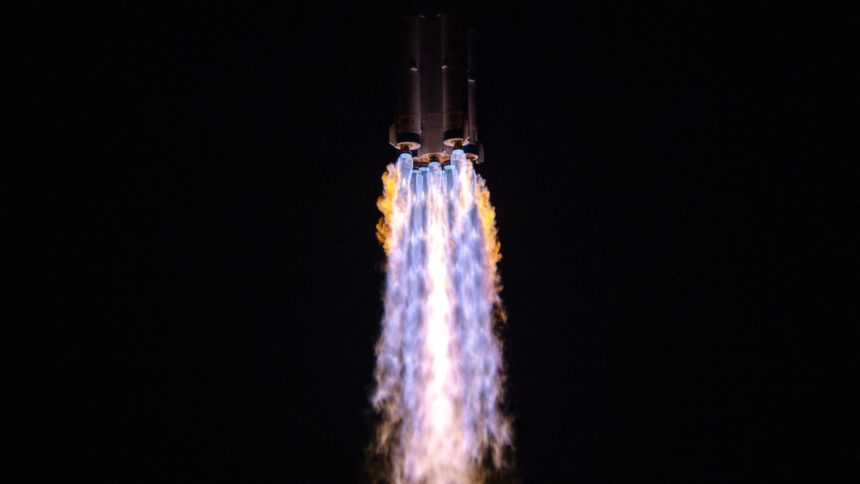
China’s burgeoning upper stages have gained traction, correlating with the nation’s intensified launch rate aimed at deploying satellite megaconstellations. Analysts have raised concerns that this growth mirrors efforts to rival SpaceX’s Starlink satellite service. As China embarks on launching its own constellations—such as Guowang and Spacesail—predominantly at altitudes exceeding 800 kilometers, the forecast suggests that the country may execute upwards of 1,000 rocket launches over the next ten years. This prospective increase raises alarms about littering the already congested space environment with more orbital debris, further complicating space traffic management and sustainability.
In parallel, advancements in missile propulsion systems have taken center stage with DARPA’s recent collaboration with Voyager Technologies. The defense agency has allocated a $16.5 million contract aimed at refining solid rocket motor thrust-control technologies. This initiative, a component of DARPA’s “Burn n’ Go” program, addresses the crucial need for adaptable propulsion systems across various military applications, from tactical missiles to satellite launches.
Solid rocket motors are renowned for their reliability and ease of manufacture. However, they traditionally lack the flexibility of liquid-fueled systems, as their thrust profiles are pre-defined during production. The innovative approach being explored by Voyager involves a novel “propellant-embedded” method that allows adjustments to the thrust of solid rocket motors post-manufacture. Currently in Phase 2 of the Burn n’ Go program, Voyager aims to demonstrate tailored solid rocket motor capabilities with practical hot-fire tests.
Matt Magaña, president of space, defense, and national security programs at Voyager, expressed confidence in their effort to transform advanced propulsion technologies into operational readiness. He emphasized that this endeavor not only seeks to advance performance metrics but also aims to pave the way for a new industrial framework capable of reshaping solid rocket motor production and application.
As both the space sector and defense industry evolve, these developments underscore the intricate balance between innovation, environmental considerations, and national security imperatives.