Bitcoin has experienced significant volatility in recent months, with a recent sell-off linked to a BlackRock fund intensifying concerns about a potential crash in its price. Following a staggering 40% drop since October of the previous year, many analysts have raised alarms despite ongoing discussions promising substantial inflows into the cryptocurrency market.
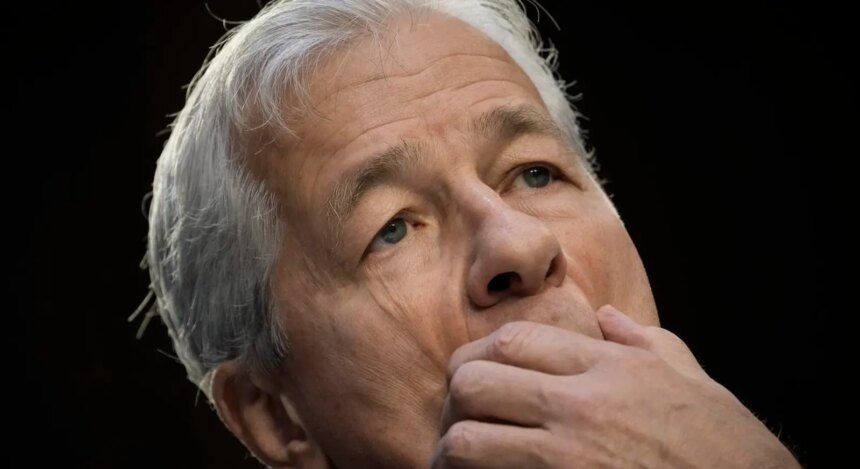
Elon Musk recently announced a surprising $1.4 billion valuation for Bitcoin, but this news coincides with cautionary remarks from JPMorgan CEO Jamie Dimon regarding the proposed Clarity Act, a legislative initiative aimed at shaping the regulatory landscape for cryptocurrencies. Dimon has expressed apprehension over the possible repercussions of the Clarity Act, which was recently passed by the Senate banking committee, suggesting it could facilitate unstable practices related to stablecoins.
The Clarity Act seeks to delineate regulatory oversight between various U.S. regulatory bodies, a move that many industry leaders, including investor Kevin O’Leary, believe could unlock unprecedented institutional investments, potentially flooding the crypto market with a trillion dollars. However, the Act faced strong opposition from crypto companies, such as Coinbase, whose CEO, Brian Armstrong, argued that its current proposal could be more harmful than beneficial.
At the center of the controversy is whether stablecoin providers should have the ability to offer interest on deposits, a practice traditional banks engage in. Banking groups contend that allowing this could destabilize the financial system and prompt customers to withdraw funds from traditional banks in favor of cryptocurrencies. Lawmakers have attempted to reach a compromise that would prevent interest payments that mimic traditional deposit interest while permitting other reward structures if they meet certain criteria.
Dimon has taken a firm stance against the Clarity Act as it stands, suggesting that banks, including smaller institutions and credit unions, are unlikely to accept it without changes. He indicated that talks with industry advocates like Armstrong are set to face considerable resistance.
Earlier this month, Patrick Witt, an executive with the Trump administration, announced an ambitious goal of passing the Clarity Act by July 4, aligning the potential legislative achievement with the upcoming 250th birthday of the United States. However, recent predictions have suggested that the likelihood of the Act passing has diminished from nearly 70% to just above 50%, adding to the uncertainty surrounding the future of Bitcoin and the broader crypto market.
Despite a modest recovery from its recent lows, Bitcoin remains significantly below its previous peak of $126,000, reached last October. Analysts have noted that ongoing uncertainty regarding the Clarity Act, coupled with a broader market shift towards technology stocks, has placed additional downward pressure on Bitcoin, recently pushing it below the crucial $76,000 mark. As market participants react to these developments, the spotlight remains on the potential implications of regulatory changes and their impact on the digital currency landscape.