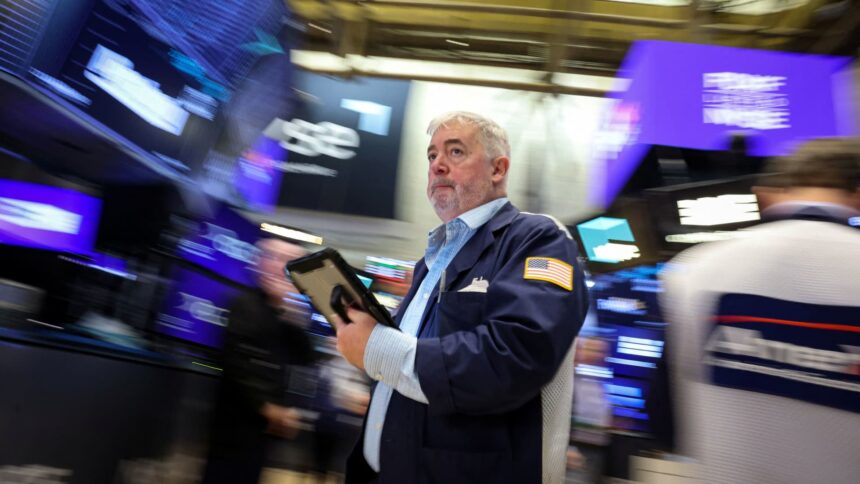
Traders at the New York Stock Exchange (NYSE) are witnessing a surge of optimism as the market reaches unprecedented highs, driven in large part by enthusiasm for artificial intelligence (AI) and a notable influx of initial public offerings (IPOs) from powerhouse companies such as OpenAI, Anthropic, and SpaceX. The S&P 500 shattered the 7,600 mark for the first time, closing at a record high, along with similar gains in the Dow Jones and Nasdaq indices. Meanwhile, Japan’s Nikkei 225 also recorded impressive increases, signaling a broad global market rally that seems to overlook geopolitical tensions in favor of bullish sentiment surrounding AI technologies.
However, seasoned investors are advised to tread cautiously. Goldman Sachs CEO David Solomon, while acknowledging the current market exuberance, warned that this sentiment can quickly shift from optimism to fear. He noted that the rapid rise of the S&P 500 bears echoes of pre-crash behaviors, specifically referencing the notable increase before the 1987 stock market downturn. Deutsche Bank has also raised red flags, stating that the pace of the rally is unprecedented for an economic context not emerging from recessionary conditions.
In the realm of cryptocurrencies, Bitcoin has seen a downward trend, falling to levels not witnessed since February. Analysts suggest that investors are prioritizing liquidity in traditional markets and the ongoing IPO wave over alternative assets.
On the energy front, oil prices are on the rise, spurred by stalled diplomatic talks between the U.S. and Iran. Tensions have escalated, with the U.S. Central Command announcing defensive strikes against Iranian targets amidst reports of a lack of communication between the two parties. In a related event, CNBC is scheduled to interview Israeli President Benjamin Netanyahu, promising insights into regional developments.
Trade tensions are also resurfacing as the U.S. Trade Representative has proposed imposing additional tariffs of up to 12.5% on imports from 60 countries, targeting nations including the European Union, China, and Japan due to their failure to curb goods produced with forced labor.
In the luxury sector, Audemars Piguet has managed to maintain its watch prices despite initial concerns surrounding its recent collaboration with Swatch. The partnership had raised fears among collectors that it might dilute the brand’s exclusivity. However, contrary to predictions of a decline in brand value, prices on the secondary market have remained stable, suggesting that Audemars Piguet’s reputation for quality and innovation continues to resonate with consumers.
As markets react to these developments, staying informed will be crucial for investors navigating the intricate landscape of current global finance.