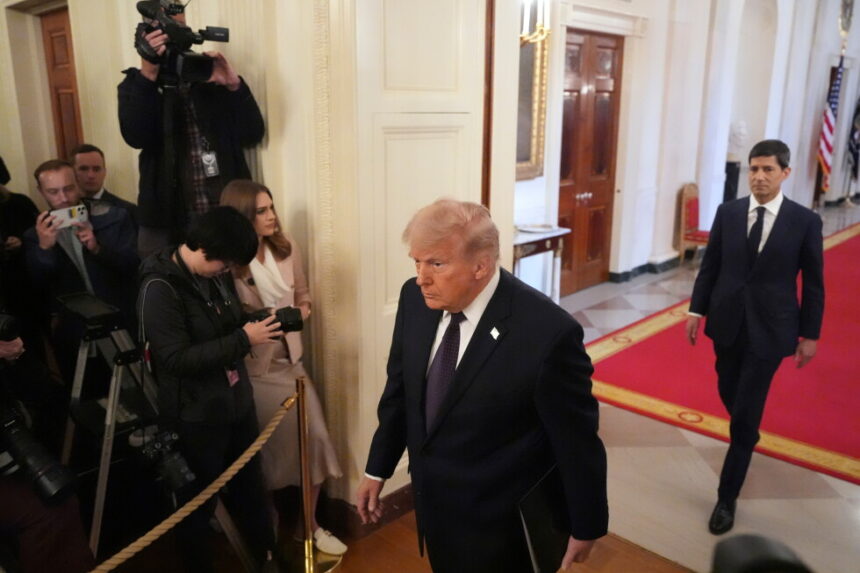
President Donald Trump has enacted an executive order aimed at overseeing artificial intelligence, a decision made just days after he postponed a planned ceremony due to concerns that a previous policy draft might undermine America’s technological dominance. This new framework is designed to assess the national security risks associated with advanced AI systems prior to their public launch, with a review timeline capped at 30 days. The participation of AI developers in this vetting process will be voluntary.
The executive order emphasizes the dual nature of advanced AI capabilities: while they enhance national strength, they also pose novel national security challenges requiring coordinated responses across various government departments. However, the specifics of how this new order differs from the previously shelved version remain unclear. The 30-day review period is shorter than some industry experts anticipated, potentially reflecting the need to balance safety with the rapid pace of technological advancement.
Previously, Trump had canceled an Oval Office gathering with technology leaders, indicating dissatisfaction with an earlier draft of the order. “We’re leading China, we’re leading everybody, and I don’t want to do anything that’s going to get in the way of that lead,” he stated, underlining his priority to maintain the U.S. technological edge.
The White House described the executive order as a means for “frontier labs” — companies known for developing cutting-edge AI technologies like Anthropic, OpenAI, and Google — to voluntarily share advanced cyber models. The aim is to bolster critical infrastructure security and enhance governmental cyber defenses without imposing excessive oversight that could stifle innovation and free speech.
Juan Londoño, a policy analyst at the Cato Institute, commented that while the order is not without flaws, it marks progress in prepping the nation for sophisticated AI implementation. He raised concerns about the lack of clarity regarding which AI models would undergo scrutiny and how the National Security Agency’s director would determine which participants gain early access. Londoño warned that such discretionary power could potentially lead to abuses, particularly against companies that may have conflicts with the government, as seen in the case of Anthropic’s legal disputes over a Pentagon contract.
The call for new AI cybersecurity measures follows the announcement of Anthropic’s advanced AI model, Claude Mythos, which reportedly possesses capabilities for identifying cybersecurity vulnerabilities in software. In response, Treasury Secretary Scott Bessent and outgoing Federal Reserve Chair Jerome Powell convened a meeting with Wall Street executives to discuss risks tied to Mythos. While Anthropic has limited access to this tool to a select group of trusted partners, it has recently expanded that circle by an additional 150 organizations.
In response to Trump’s recent order, Anthropic voiced support, calling it a significant advancement for America’s standing in AI and expressing eagerness to collaborate on its implementation. Similarly, OpenAI and Google also acknowledged the policy as a positive step forward, advocating for safety frameworks to evolve through democratic processes, integrating technical expertise and broad community input.
Democratic Senator Mark Warner welcomed Trump’s initiative but criticized the administration for its earlier actions that dismantled important safeguards established by former President Joe Biden. Trump’s prior repeals raised concerns about the timeliness of the current administration’s response to AI oversight, suggesting that a more proactive approach might have been advantageous.