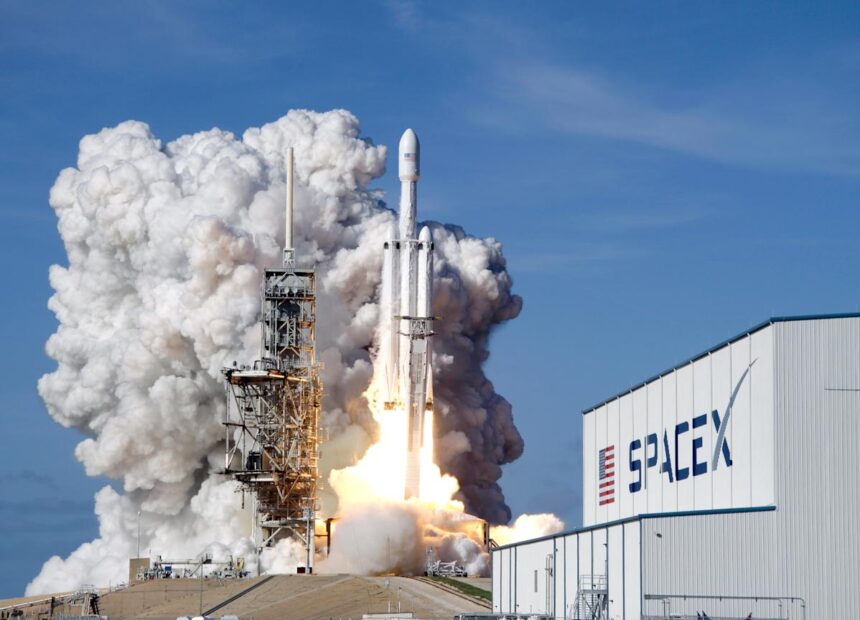
If reports are accurate, SpaceX is poised to price its much-anticipated IPO the night of June 11, paving the way for trading to potentially commence as early as June 12. The rocket and satellite company led by Elon Musk is reportedly planning to offer 555.6 million shares at a price of $135 each, with an ambitious goal of raising $75 billion. This move could propel SpaceX as the largest IPO in history, granting the company an astronomical valuation of $1.75 trillion if the offering goes as planned.
A notable aspect of this upcoming IPO is its potential 30% retail allocation. Underwriters from major trading platforms are expected to provide retail investors with access to shares post-IPO, marking a significant step toward democratizing investment in one of the most closely watched companies in the space sector.
For those eager to invest in SpaceX ahead of the public offering, options do exist, although they come with inherent risks, trade-offs, and significant fees. The most direct route to acquiring SpaceX stock before its IPO is through the private secondary market. These transactions involve existing shareholders — employees, early investors, or former contractors — selling their vested stock to new buyers. Unlike traditional IPOs, SpaceX does not issue new shares in such deals; instead, investors purchase shares from those already holding them.
Greg Martin, a representative from Rainmaker Securities, noted that SpaceX consistently ranks among the most actively traded names on their platform. He attributes this popularity to the company’s robust business model and continuing expansion opportunities. According to Martin, demand for SpaceX shares often exceeds supply, a trend that persists even when broader secondary market activity slows.
Investors should be aware that purchases made in the secondary market are typically subject to a lockup period of 90 to 180 days post-IPO. During this time, shares cannot be sold, a common practice designed to manage market supply immediately after listing. Once the lockup period concludes, shares can be traded just like any other public stock on the exchange where SpaceX lists, with the Nasdaq Composite being the frontrunner.
Investment in private markets requires individuals to qualify as accredited investors, defined as those with an individual income exceeding $200,000 for at least two consecutive years, or a net worth surpassing $1 million (excluding their primary residence). Furthermore, minimum investment amounts are considerable, with most platforms demanding at least $50,000 to $100,000 for each transaction.
In addition to Rainmaker, notable platforms involved in the secondary markets include EquityZen, Forge Global, and Hiive. Hiive, as a newer entrant, provides real-time pricing data, which is beneficial for investors. As of April 2026, Hiive listed SpaceX shares at approximately $832 each.
Other methods to gain exposure to SpaceX prior to the IPO are structured through special-purpose vehicles (SPVs) or funds. In these scenarios, investors hold an interest in a fund that owns SpaceX shares, rather than owning shares outright. Post-IPO mechanics for these funds can vary; some may provide stock or, more commonly, offer cash payouts to investors.
Many investors, while appreciating early exposure to SpaceX stocks, are wary of the heavy fees associated with such investments. Experts urge caution, particularly regarding situations where high fees and a small ownership percentage make investments less attractive.
For those seeking a simpler route to invest in SpaceX with greater liquidity, there are publicly available ETFs and mutual funds. The Fidelity Contrafund, a growth investment managed by William Danoff since 1990, has a stake in SpaceX valued at around $3.5 billion, amounting to over 2% of the fund’s total assets. The ERShares Private-Public Crossover ETF also has exposure to SpaceX through special-purpose vehicles.
Notably, the Baron Partners Fund, with around 33% of its portfolio tied to SpaceX, is its largest holding. Similarly, the ARK Venture Fund, led by renowned investor Cathie Wood, lists SpaceX as its top holding, further highlighting the company’s prominence in the investment community.
Several funds offer more generalized exposure to the space sector, including the ARK Space & Defense Innovation ETF and the Procure Space ETF, which track companies across various relevant sectors.
As SpaceX files for an IPO that may target valuations ranging from $1.5 trillion to an astounding $2 trillion, the window for pre-public investment is quickly closing. Investors are left to ponder the optimal timing and whether now is the right moment to invest. As emphasized by experts, the mantra remains that while SpaceX may be an exceptional company, that does not necessarily guarantee it is a wise stock investment at this juncture.