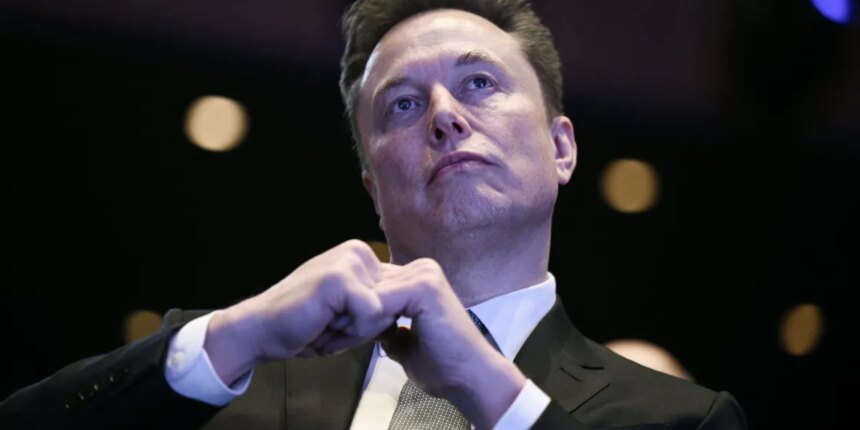
In the lead-up to SpaceX’s anticipated $75 billion initial public offering (IPO), CEO Elon Musk is crafting a pay package that stands apart from previous attempts, particularly his controversial $56 billion compensation deal at Tesla. This time around, Musk has carefully structured his financial arrangements to avoid the legal disputes that nearly derailed his earlier award, making it significantly more transparent to potential investors.
Musk’s new compensation package is prominently featured in SpaceX’s IPO registration statement, allowing investors to clearly understand the terms before buying shares. Unlike in the Tesla case, where the board approved Musk’s stock option award after the company was public—opening the door to shareholder challenges—this deal is laid out in plain sight in SpaceX’s filings.
Another strategic move Musk made was relocating SpaceX’s incorporation from Delaware, known for its corporate governance laws, particularly after facing setbacks in that state’s court system. With the transition to Texas, shareholders seeking to challenge Musk’s compensation would require a substantial stake—3% of the company’s equity—to bring a legal claim, a threshold made steeper given SpaceX’s projected valuation of $1.8 trillion.
Experts observing this shift emphasize the importance of transparency. Jay Ritter, a finance scholar from the University of Florida, noted that potential backers are now presented with the compensation structure upfront, highlighting the difference from Tesla’s previous circumstances.
Musk’s compensation plan involves ambitious performance metrics that include achieving a staggering $7.5 trillion market capitalization and establishing a human settlement on Mars. The stock grant, valued at an astonishing $175 billion with a potential upside of $1.1 trillion, hinges on these exaggerated goals, underscoring Musk’s penchant for audacious milestones. Despite the lofty targets being labeled “improbable” by SpaceX, they serve to maintain media buzz and public interest leading up to the IPO.
The unique structure of the package affords Musk not just potential wealth but also significant control over SpaceX. While his earlier Tesla award was highly conditional, the new SpaceX stock grants comprise super-voting Class B shares, granting him a disproportionately high level of voting power even if he does not meet the performance benchmarks.
As it stands, Musk controls 85.1% of SpaceX’s voting power before the IPO, a stark reminder of his dominance in the company. The conditions for Musk to unlock shares are extensive; he must hit various market value markers and meet ambitious operational goals, including significant advancements in technology and infrastructure.
Industry observers have expressed varying opinions on the implications of Musk’s approach, particularly the dual-class stock structure. While some view it as detrimental to corporate governance, others argue that it motivates founder-CEOs like Musk to prioritize the company’s market performance, as their financial futures are intricately tied to stock prices, impacting employee wealth and company morale.
With the structure of Musk’s pay package allowing for immediate voting rights attached to shares that may never financially vest, the arrangement can be seen as a calculated method to secure ownership while entertaining bold aspirations.
The move to Texas has also implications for corporate oversight, as SpaceX’s operations will now be governed by the Texas Business Organization’s Code— a system seen as less favorable to shareholders compared to Delaware’s regulations. This shift could complicate any legal challenges to Musk’s pay structure while ensuring a controlled environment that limits potential shareholder scrutiny.
Overall, this new chapter in Musk’s career with SpaceX illustrates a bold ambition coupled with strategic maneuvering—both designed to bolster his financial standing and maintain his authoritative grip on the company. As SpaceX approaches its IPO, investors will have to weigh the potential risks and rewards presented by Musk’s uniquely crafted compensation plan.