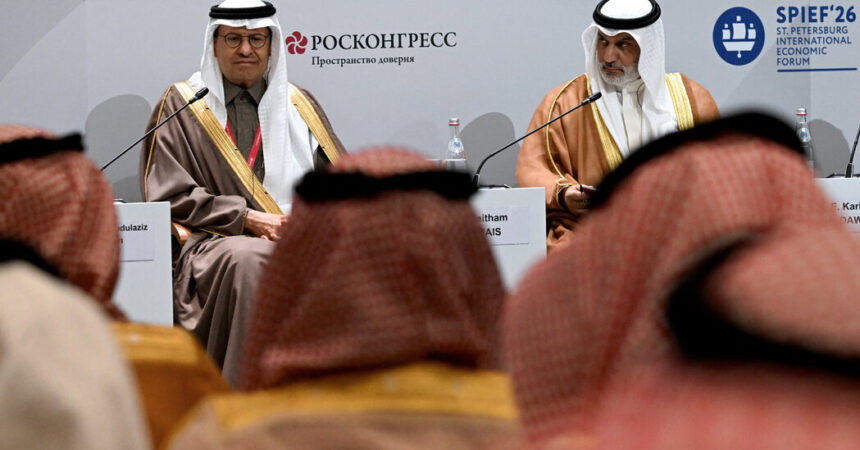
In a significant development within the global oil market, OPEC Plus, a coalition of influential oil-producing countries, has announced an increase in production by 188,000 barrels per day for July. This decision comes amidst ongoing tensions between the United States and Iran, which have resulted in a blockade of the Strait of Hormuz, a critical passage for a significant portion of the world’s oil supply.
The latest commitment is part of OPEC Plus’s broader strategy to enhance output, as the group aims to navigate the complexities of the current geopolitical landscape. Typically, such production increases would exert downward pressure on oil prices; however, the effective closure of the Strait of Hormuz has created a bottleneck that hampers the anticipated benefits of this rise. The consortium issued a statement emphasizing their intent to “closely monitor and assess market conditions” while adopting a cautious approach.
This decision follows a remote meeting of OPEC Plus members, which include key players such as Algeria, Iraq, Kazakhstan, Kuwait, Oman, Russia, and Saudi Arabia. The ongoing conflict in the region, exacerbated by U.S.-Israeli strikes on Iran since late February, has severely impacted global oil and gas prices, fueling inflationary pressures and prompting countries to seek alternative energy sources.
Before the outbreak of conflict, the Strait of Hormuz was responsible for transporting approximately one-fifth of the world’s energy supply. The Iranian closure of this maritime route in retaliation to military actions has forced several OPEC members, including Saudi Arabia, Iraq, the United Arab Emirates, and Kuwait, to reduce crude production significantly. This situation not only poses challenges for the global economy but also tests diplomatic relations among nations in the Persian Gulf.
The United Arab Emirates’ recent withdrawal from OPEC further complicates the landscape, as it was a significant oil-producing member and had long expressed dissatisfaction with the organization’s production quotas.
The newly announced July production increase aligns with OPEC’s earlier decision in 2023 to gradually reverse a reduction of 1.65 million barrels per day that had been in place among its members. Following a modest increase of 188,000 barrels per day earlier this year, the consortium had previously indicated intentions to raise production quotas by an additional 206,000 barrels daily.
Experts, including Jacques Rousseau from ClearView Energy Partners, express skepticism regarding the real impact of this production boost, pointing out that much of the additional oil cannot effectively reach the market due to the closed strait. Rousseau highlights that the situation has devolved into a “waiting game,” wherein the future of oil supply remains contingent on the resolution of geopolitical tensions and the reopening of crucial transport routes.
The International Energy Agency recently reported that the ongoing closure of the Strait of Hormuz has resulted in a staggering loss of oil supply, which has dropped to levels not witnessed in more than thirty-five years. This fossil-fuel supply shock has intensified discussions among countries about accelerating domestic renewable energy initiatives to bolster national energy security.
Despite these challenges, OPEC Secretary General Haitham Al Ghais remains optimistic about oil demand, stating that signs of declining demand have yet to be observed. As the global oil landscape shifts, the effects of these developments on production, pricing, and energy strategy will continue to be closely monitored by nations and analysts alike.