Over the past three decades, the S&P 500 index has demonstrated impressive financial growth, delivering a total return of 1,770% as of June 5. This substantial increase highlights the stock market’s potential as a leading avenue for wealth accumulation. An investment of $10,000 in the S&P 500 in June 1996 would have ballooned to approximately $187,000 today, further emphasizing the strength of this asset class, especially over the past decade.
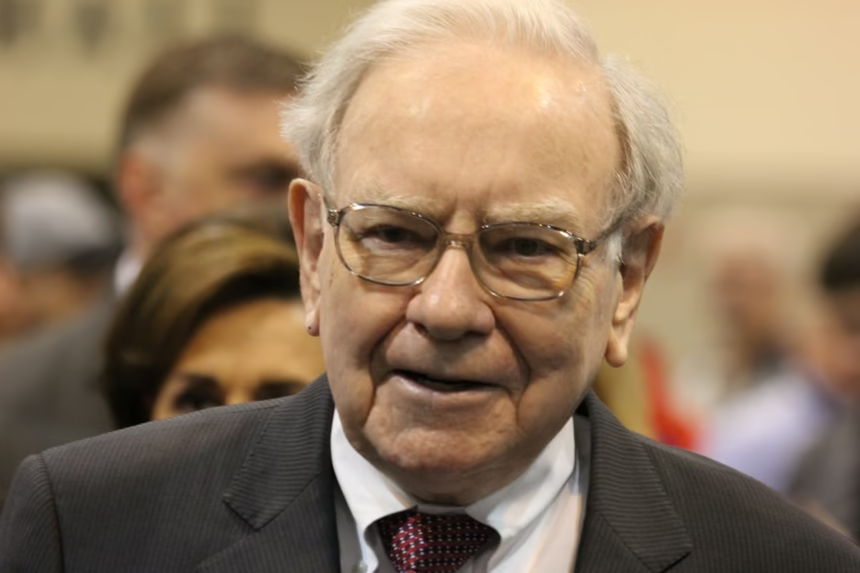
For those considering entering the stock market, the task can appear overwhelming. Fortunately, insights from seasoned investors like Warren Buffett can provide valuable guidance. Known for his acumen in capital allocation, Buffett has reportedly compounded Berkshire Hathaway’s share price by nearly 20% annually over a remarkable six decades. However, his advice to everyday investors is refreshingly straightforward: invest in a low-cost S&P 500 index fund.
Buffett’s recommendation stems from the recognition that most individuals lack the time, expertise, or inclination to analyze and manage a portfolio of individual stocks. Statistics reveal that even expert fund managers often fall short when competing against the S&P 500 over the long term, primarily due to factors like high trading fees and suboptimal portfolio management.
One of the favored choices for a low-cost investment is the Vanguard S&P 500 ETF (VOO), which has a mere 0.03% expense ratio. This small fee translates to significant savings for investors over time compared to the higher costs associated with actively managed funds. Tracking the S&P 500 index, the ETF holds major stocks such as Nvidia, Apple, Microsoft, Amazon, and Alphabet, providing a robust exposure to the technology sector, particularly in the realms of artificial intelligence.
While the ETF covers all sectors of the economy, allowing for diversified market exposure, it’s important to note that the S&P 500 is currently trading at historically high valuations. This raises questions about its future return potential, especially considering the remarkable 316% return observed over the last decade may not be easily replicated.
Despite valuation concerns, many experts believe it is not too late to invest. Companies at the forefront of growth today are among the most dominant in history, justifying the sustained interest from investors. For those hesitant about timing their investment due to current valuations, employing a dollar-cost averaging (DCA) strategy can be a prudent approach. This involves consistently allocating a fixed amount of money into the market at regular intervals, which can help mitigate the risks associated with market timing.
For instance, an initial investment of $10,000 in the Vanguard S&P 500 ETF, coupled with a monthly contribution of $100, could lead to an estimated total of $382,000 over 30 years, based on a historical annualized return of 10%. Adding even larger sums would only amplify these potential gains.
In conclusion, while the stock market may initially seem intimidating, embracing strategies like those suggested by Warren Buffett, along with the simplicity of index funds, could provide a solid pathway for new investors looking to build wealth over time.