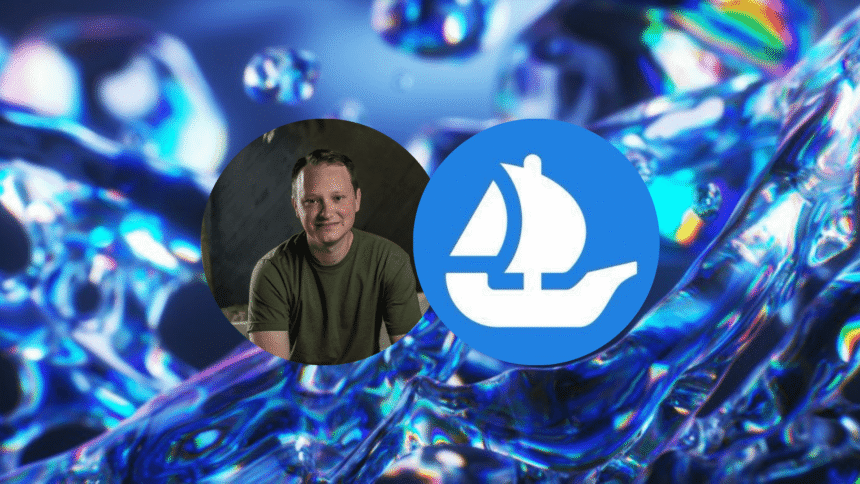
Oliver Maroney, the Head of Business Development and Partnerships at OpenSea, has become an influential advocate for the evolution of web3 gaming and digital ownership. With a rich background in esports management, sports reporting, and content creation, Maroney provides a unique perspective at the nexus of technology and community dynamics.
At OpenSea, Maroney has zeroed in on gaming as a pivotal area where blockchain technology and NFTs can create genuine value. He emphasizes how these innovations facilitate true ownership of in-game assets and simplify trading and discovery for players and developers alike. His insights illuminate both the potential and the hurdles that come with expanding web3 gaming to a broader demographic.
The Importance of Gaming
Maroney has dedicated significant thought to the concept of digital ownership within gaming. He points out that players spend billions on digital assets—often called skins—yet typically lack reliable options for trading or reselling them without risking account penalties. He believes that blockchain and NFTs radically change this scenario by granting players real ownership and the ability to trade in-game items transparently.
“Gaming has always fascinated me personally,” he said. “Players invest millions in skins, yet lack viable marketplace options without risking account bans. The idea of users freely trading these assets appeals to virtually anyone, whether they’re familiar with the space or not.”
He cites successful examples, such as the trading card game Parallel and titles like Pudgy Party and Off The Grid, where NFTs grant players actual control over their digital possessions. Maroney asserts that cross-game ownership isn’t a question of possibility, but rather, a matter of timing.
OpenSea’s Role in Web3 Gaming
Maroney characterizes OpenSea as much more than just a marketplace. It has emerged as a discovery hub for various projects across art, gaming, and more. The platform emphasizes storytelling and community engagement through its blog, live game streams, and events. OpenSea collaborates with creators and professional gamers to amplify the narratives of web3 gaming while attending major industry events like GDC and Gamescom.
“We’ve consistently celebrated the culture of this space,” Maroney noted. “While users can buy and sell NFTs and tokens on our platform, we also serve as a discovery hub for art, games, and beyond.”
To further enhance user experience, OpenSea has introduced practical tools such as cross-chain purchasing, allowing gamers to buy in-game assets across multiple blockchains with ease. Collection overview pages with integrated videos, graphics, and links provide useful insights for purchases, catering to both gamers and developers without requiring extensive crypto knowledge.
The Significance of Quality and Community
For Maroney, NFTs in gaming gain their true value only when the underlying game and its community are robust. He recognizes that while skins and in-game tokens have practical implications, their importance is contingent on the game’s quality and the engagement of its community. He draws parallels to well-established franchises like Fortnite and League of Legends, which maintain loyal player bases due to their compelling gameplay and supportive communities.
“NFTs can range from in-game skins, which are significant to many gamers, to various other use cases,” he said. “However, without a solid game and an engaged community, the relevance of NFTs diminishes.”
Despite the intriguing potential of cross-game economies, Maroney acknowledges the complexities involved in making them a reality. Fragmented liquidity and competitive studio dynamics present challenges, and while collaborations have made headway, full adoption is still a distant goal.
Navigating Developer Skepticism
When discussing web3 with traditional game developers, Maroney opts for a more informative approach rather than a hard-sell strategy. He provides data and insights while allowing developers to assess how these technologies align with their objectives.
“Understanding them is crucial,” he explained. “We avoid aggressive pitches. Instead, we share information and maintain ongoing communication. Partnerships flourish when both sides are genuinely interested in collaboration.”
Commitment to Security
Security remains a top priority for OpenSea. Maroney highlights the ongoing efforts of the engineering and trust and safety teams to tackle fake collections and ensure user safety. The platform constantly updates its security measures and responds to thousands of support cases.
OpenSea has launched new tools tailored to improve the user experience in web3 gaming. The recently introduced MCP server allows developers to easily connect to OpenSea’s data and services, further enhancing the landscape for creators and players.
The Future of NFTs in Gaming
Looking ahead, Maroney feels optimistic about the next wave of gaming releases. He believes that a successful game on consoles could introduce blockchain technology to millions of new players, significantly accelerating mainstream adoption.
“I’m excited about the upcoming games nearing completion,” he said. “The prospect of these games launching on consoles is thrilling. It only takes one breakout title to drive this technology into the mainstream.”
In addition, OpenSea’s partnership with games.gg signals its commitment to fostering an ecosystem where education, discovery, and trading are seamlessly integrated. Maroney views this collaboration as a significant step toward legitimizing web3 gaming while enhancing user experiences.
“Our partnership is exciting because it merges marketplace functions with a platform that already elevates content and gaming experiences,” he stated.