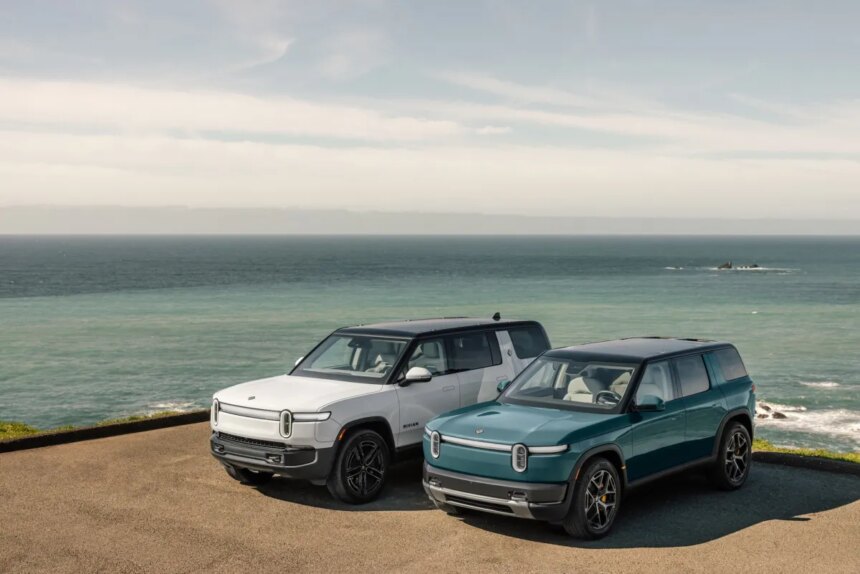
Rivian has officially initiated the delivery of its much-anticipated R2 SUVs to paying customers, a significant milestone for the all-electric automaker. This launch is seen as a pivotal moment in Rivian’s mission to scale its operations to meet mass-market demands. Company founder and CEO RJ Scaringe has emphasized the R2’s importance, calling it “maybe the most important thing we’ve launched to date,” particularly highlighting its role in the company’s ambitions toward autonomy in vehicles.
The starting price for the R2 is approximately $58,000, a strategy that aims to make the vehicle more accessible compared to Rivian’s earlier model, the R1 SUV. The company has ambitious plans for a more budget-friendly version of the R2, expected to debut at under $50,000 in 2027, with an even more basic model planned for around $45,000 later that same year. This pricing strategy aligns with Rivian’s vision of providing compelling options for a broader customer base.
Rivian has set a production target of delivering between 20,000 and 25,000 R2 SUVs by the end of this year, which would position the R2 among the fastest EV launches in U.S. history. Looking ahead, the company aims to manufacture and sell hundreds of thousands of R2 SUVs annually. Production is currently underway at Rivian’s factory in Normal, Illinois, while plans are also in place for a new facility in Georgia that is expected to be operational by late 2028.
The R2’s launch occurs amid a complex landscape for electric vehicles in the U.S. Recent regulatory rollbacks and the elimination of a federal tax credit have created challenges for the market. Traditional automakers have scaled back or abandoned their EV initiatives, and even Tesla has experienced a decline in sales. However, interest in EVs is rising globally, with countries like Canada reducing import taxes on Chinese-made electric vehicles in response to increasing car prices.
Scaringe views the current market dynamics as an opportunity for Rivian, suggesting that with fewer competitors in the U.S. EV landscape, the R2 is well-positioned to become a leading choice for consumers. The company is also banking on the R2’s future enhancements in autonomous driving capabilities. In December, Rivian unwrapped its plans to improve the SUV’s autonomy over the years, with aspirations for the R2 to eventually attain full self-driving capabilities. A recent partnership with Uber, potentially worth up to $1.25 billion, could see up to 40,000 R2 models deployed as robotaxis within Uber’s ride-hailing network.
As Rivian embarks on this new chapter with the R2, the automaker aims to navigate the evolving EV landscape and solidify its position in the competitive market.