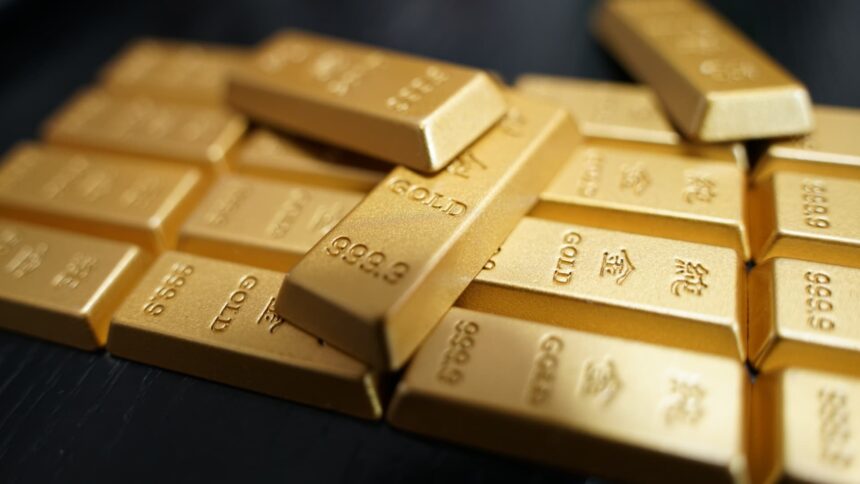
Precious metals experienced significant declines on Wednesday, as investor sentiment was heavily influenced by concerns over inflation and the Federal Reserve’s potential interest rate trajectory. At 7:05 a.m. ET, spot gold saw a decrease of 2.4%, trading at approximately $4,161.63 per ounce. U.S. gold futures followed suit, falling 2.2% to settle at $4,194.90 per ounce.
In the pre-market trading session, stocks and funds tied to gold and silver also saw declines. The ProShares Ultra Silver ETF dropped by 2.8%, while the iShares Silver Trust ETF fell by 1.4%. Notable individual stocks such as First Majestic Silver and Hecla Mining experienced losses of 3.8% and 3.1%, respectively. Broader market trends reflected these concerns, with stocks in Europe and Asia trading lower, and U.S. equity futures indicating a waning outlook ahead of Wall Street’s regular trading session. Cryptocurrencies, too, were affected, with Bitcoin dropping approximately 1.3% to trade at $61,049.25.
Ewa Manthey, a commodities strategist at ING, remarked to CNBC that the current pressures on gold and silver are largely due to a shift in market focus toward interest rates and inflation risks, overshadowing traditional safe-haven demand. “The escalation in the Middle East is pushing oil higher and lifting inflation risks, which in turn is reinforcing expectations that central banks will maintain tight monetary policies for an extended period,” she stated. This environment is contributing to higher real yields, which act as a headwind for non-yielding assets such as gold and silver.
Current money market indications suggest a 98.2% probability that the Federal Reserve will maintain its key interest rate during its upcoming Federal Open Market Committee meeting, according to the CME’s FedWatch tool. Additionally, traders are assigning about a 40% chance to a rate hike by the Fed’s meeting in October. The European Central Bank (ECB) is similarly expected to raise interest rates by 25 basis points at its own meeting on Thursday, as indicated by LSEG data.
Before the onset of the U.S.-Iran conflict, which has lasted over 100 days, market analysts had anticipated a more dovish stance from the Fed later this year. Manthey acknowledged that despite ongoing geopolitical tensions, the primary driver of current market behavior is macroeconomic factors: “Higher yields and a more hawkish rate outlook are outweighing the safe-haven bid. Metals remain vulnerable unless there is a clear shift in lower yields or softer U.S. inflation data.”
Following recent U.S. jobs data that exceeded expectations, financial markets saw a broad sell-off, reinforcing speculations about the likelihood of a Fed rate hike. Raj Abrol, CEO of global risk management platform Galytix, asserted that gold and silver are being influenced by a tightening credit environment. “When real yields rise alongside a firming dollar, the cost of capital increases for dollar-funded borrowers in emerging markets and other leveraged credits,” he explained.
Rajiv Sawhney, Head of International Portfolio Management at Wave Digital Assets, characterized the current atmosphere as one of broad-market deleveraging. He noted that assets have shown increased correlation with equities, suggesting that overextended positions are being sold off to fund weaker investments. “This essentially reflects a flushing out in the market,” he articulated. He observed that both gold and silver have breached their 200-day moving averages, which often serve as indicators of potential changes in longer-term trends.
In contrast, Alex King, an investment strategy analyst at Wellington Management, counseled against viewing commodities as a monolithic trade subject to geopolitical or inflation pressures. “Investors should examine the unique drivers and portfolio roles of individual assets like gold,” he advised. Despite a pullback in gold prices, which has been in a bullish trend since late 2022, King emphasized that this decline may signify cyclical excess rather than a breakdown of the trend. He noted the importance of ongoing central bank demand and potential shifts in U.S. dollar strength, which could support gold’s status as a viable alternative asset.
In a cautionary note, analysts from Citi warned that gold prices could be at risk of decreasing by as much as 20% by autumn. However, King highlighted that a resurgence in central bank interest in gold could buoy its prices, especially if major bondholders like China and Japan reallocate their reserves. The dynamics of reserve currencies, including any potential weakening of the U.S. dollar, could further bolster gold’s appeal as a store of value.