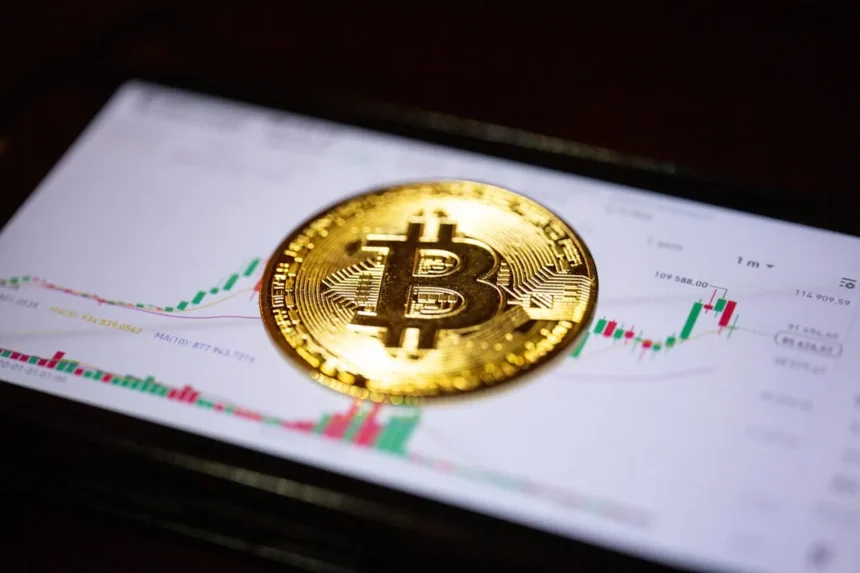
Bitcoin (BTC) recently experienced a significant decline, reaching a new cycle low of approximately $59,000 last week. Although there has been a slight recovery, the cryptocurrency remains down more than 50% from its all-time high of around $126,000, which it achieved in October 2025. Current data from CoinGecko reveals that Bitcoin has dropped over 29% year-to-date and has seen a more than 24% decrease in the past month, with its price hovering near $61,792 at the time of reporting.
On-chain analytics firm CryptoQuant suggests that Bitcoin may be approaching a new bottom. Julio Moreno, the head of research at CryptoQuant, pointed out a critical issue: a significant decline in demand. The firm reported that total demand, which takes into account both perpetual-futures positioning and apparent spot buying, decreased by 652,000 BTC last week. This marks the largest one-week drop in nearly four years.
As Bitcoin’s price fell below $60,000, leveraged long positions were liquidated, leading to increased selling pressure on spot markets. Furthermore, a year-long gauge of demand has turned negative, and the drop is accelerating at the fastest rate since early 2024. Institutional investors appear to be retreating as well. In the past 30 days, demand through spot exchange-traded funds has plummeted, showing a net loss of 74,000 BTC—the lowest since the inception of U.S. funds in January 2024.
Analyzing recent fund flows, SoSo Value reported that as of June 5, total net outflows from spot Bitcoin ETFs reached about $1.72 billion, with an additional $168.81 million withdrawn in the current week by June 9. This shift indicates that instead of absorbing sell orders, these ETFs are contributing to the surplus supply as investors reduce their holdings.
CryptoQuant suggests that Bitcoin might find a bottom near the $53,600 mark, though minimal buying activity indicates that a sustained recovery is still a distant prospect. This proposed level aligns with Bitcoin’s realized price, a metric reflecting the average purchase price of holders’ coins. Historically, Bitcoin has tended to find its lowest points near this threshold, which Moreno has identified as a reliable valuation indicator. Notably, this level was briefly breached during the collapse of FTX in late 2022 before a rapid rebound occurred.
Moreno emphasized that this analysis represents a scenario rather than a definitive forecast. While reaching the realized price aligns with historical trends, there is no certainty that the market will decline to this level. A critical component of a true market bottom—a wave of panic selling—has not yet materialized. In the last month, holders have realized losses on 187,000 BTC, considerably lower than the 400,000 losses recorded when Bitcoin first dropped below $60,000 in February, and far less than the 1.2 million during the FTX crisis.
This relative restraint suggests that many holders are still holding onto their assets profitably and have not been compelled to sell. Moreno argues that until buying stabilizes and forced selling reaches its peak, the $53,600 price point should be regarded as a potential floor rather than a confirmed bottom.