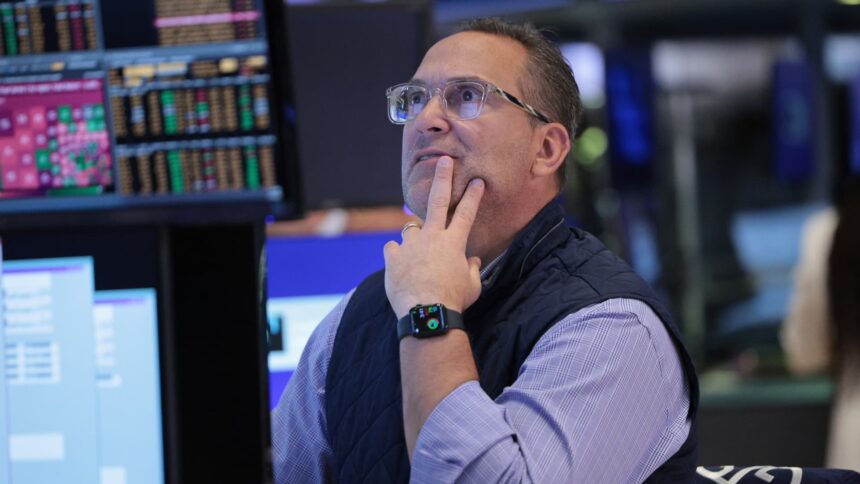
Traders were bustling on the floor of the New York Stock Exchange during a pivotal trading session, as significant national and international events shaped market dynamics. Recently released data revealed a significant uptick in U.S. consumer prices, which rose at an annual rate of 4.2% in May, leading President Trump to express an unexpected sentiment: “I love the inflation.” He suggested that prices would plummet “like a rock” once conflict with Iran settles down.
This conflict escalated with renewed hostilities entering a second day, focusing on shipping routes through the vital Strait of Hormuz. The ongoing clash has caused notable repercussions: rising oil prices are feeding inflation, which now poses a substantial challenge for the new Federal Reserve Chair, Kevin Warsh.
The U.S. military launched multiple strikes on Iranian targets, labeling the actions as responses to what it considers Iran’s “unwarranted and continued aggression.” These developments follow a series of retaliatory attacks after a U.S. Apache helicopter was reportedly downed near Hormuz. Amid these tensions, Trump announced further strikes, emphasizing the need for a “meaningful” deal from Tehran. The President disclosed a covert operation aimed at escorting over 200 commercial ships and facilitating the transit of more than 100 million barrels of oil through Hormuz, a claim somewhat supported by recent JPMorgan estimates indicating that around 2 million barrels per day could still be moving through tankers with their transponders disabled.
Iran has threatened to close the Strait of Hormuz to all vessels, while U.S. Central Command claimed that commercial shipping continued unimpeded throughout the region. Oil futures responded to these tensions, with U.S. crude for July seeing a rise of 2.94%, reaching $92.68 per barrel, and Brent futures increasing by 2.52% to $95.45 for August delivery.
The recent Consumer Price Index (CPI) report highlighted surging energy costs impacting the broader economy. As inflation concerns loom large, the market sentiment appears to lean towards the Federal Reserve maintaining its short-term interest rates. Wall Street experienced a downturn, with the Dow Jones Industrial Average dropping over 900 points and stock futures remaining under pressure. In extended trading, Oracle’s stock tumbled more than 10% after announcing plans to raise an additional $20 billion to bolster its AI capabilities.
Amid the volatility surrounding AI stocks, Thoma Bravo’s founder, Orlando Bravo, offered a more positive forecast, claiming that the “SaaSpocalypse” has concluded and that AI will provide a significant boost to businesses. Conversely, private credit managers from firms like Ares and Man Group expressed outlooks suggesting a reckoning rather than an outright collapse in the market.
The excitement in the markets is further fueled by the anticipated IPO from SpaceX, which is expected to set records as the largest in history and is the first of three major AI listings this week, with OpenAI and Anthropic also having filed confidentially.
In another significant development, Meta Platforms announced a major deal to lease an AI-focused data center from Mukesh Ambani’s Reliance Industries in India. The facility, designed to deliver 168 megawatts of capacity, represents a strategic investment for Meta, aimed at enhancing its global AI infrastructure. CEO Mark Zuckerberg noted that this investment would solidify the company’s commitment to both scaling its infrastructure and contributing to India’s economy.
As global economic conditions remain dynamic, attention is focused on how these developments will impact market trends and investor sentiment in the days ahead.